-
 Photography: Daniel Hanoch
-
 Photography: Daniel Hanoch
-
 Photography: Daniel Hanoch
-
 Photography: Daniel Hanoch
-
 Photography: Daniel Hanoch
-
 Photography: Daniel Hanoch
-
 Photography: Daniel Hanoch
-
 Photography: Daniel Hanoch
-
 Photography: Daniel Hanoch
Solo at Rothschild
a space for solo exhibitions, created by the Edmond de Rothschild Center especially for members of the Edmond de Rothschild Center network. Its purpose is to foster the development of new projects and facilitate the production of existing works by providing curatorial guidance and encouraging group thinking processes.
Three solo exhibitions at the Edmond de Rothschild Center, floor -1.
May-December 2026
Participants: Alma Ben David and Lior Harel, Amir Cohen, Oren Rozensal
Curators: Tali Romem, Gabi Glick, Einat Gabai Levi
[2/3]
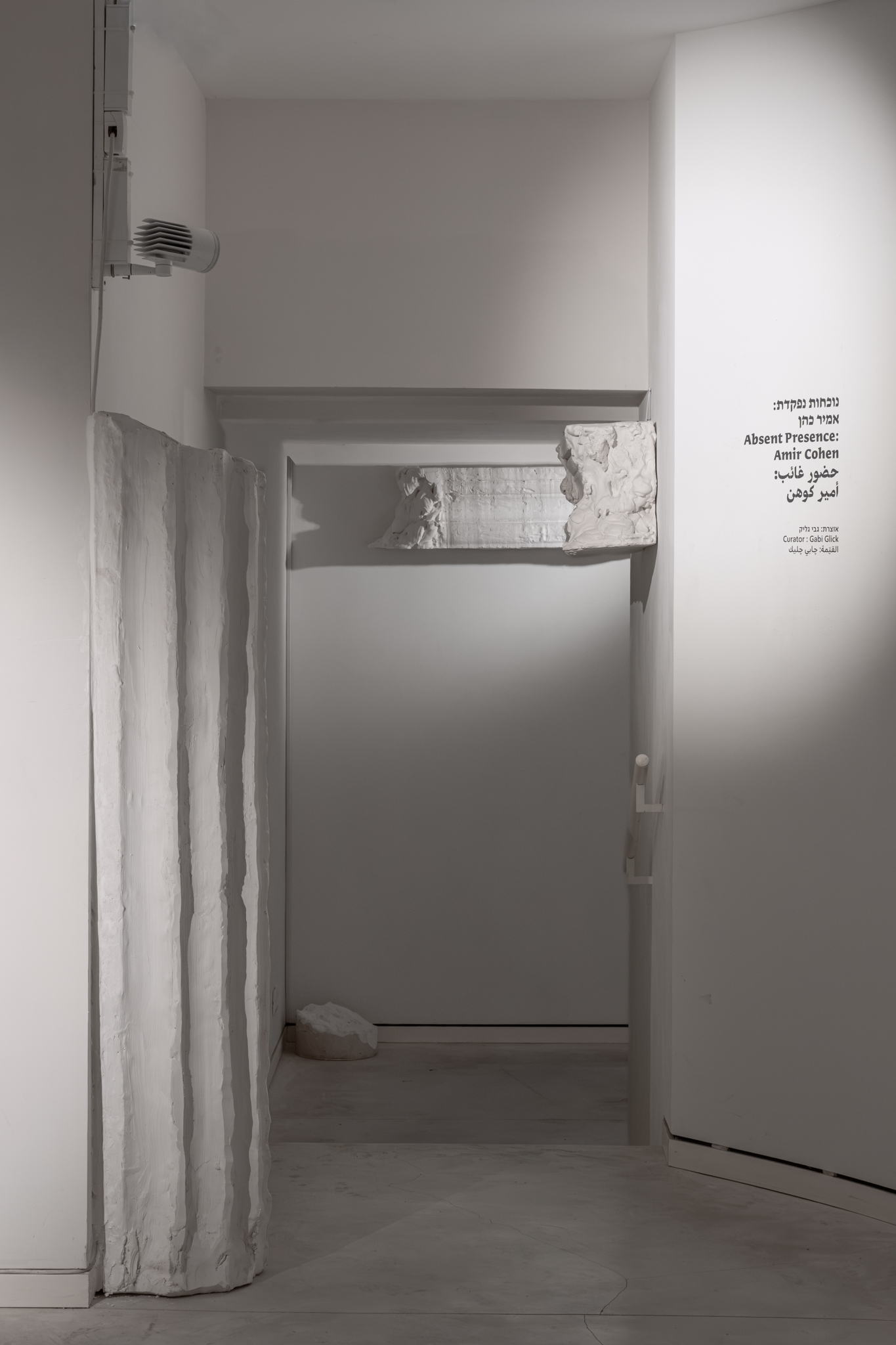
Amir Cohen | Absent Presence
Curator: Gabi Glick
As the commotion died down, once the story was told, Nike remained frozen in place.
Not as a victory goddess hovering over a moment of glory, but as a figure that bears the weight of what has already taken place. The body is still present but something in it has changed. Time has piled up within it, leaving traces and fractures – not a memory of a moment, but a testimony to what refuses to expire.
Some moments do not end once they have occurred. Moments that have already passed, but linger in matter, in body, in mind. These moments do not recur as a whole story, but as slender sediments, as ruptures or reverberations. Sometimes they are almost invisible, and sometimes they seek rediscovery. Not to explain themselves, but to remind that they’re still present.
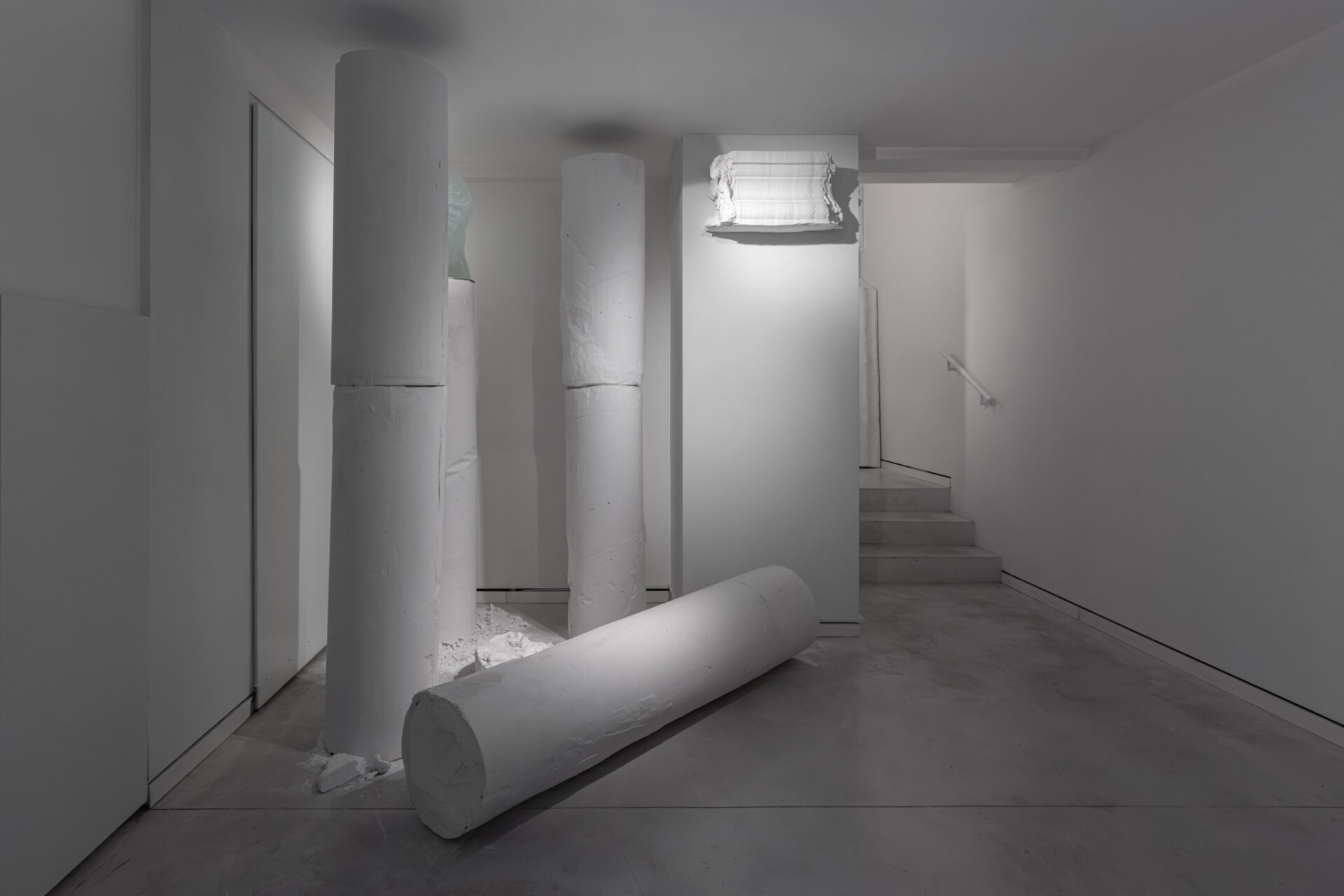
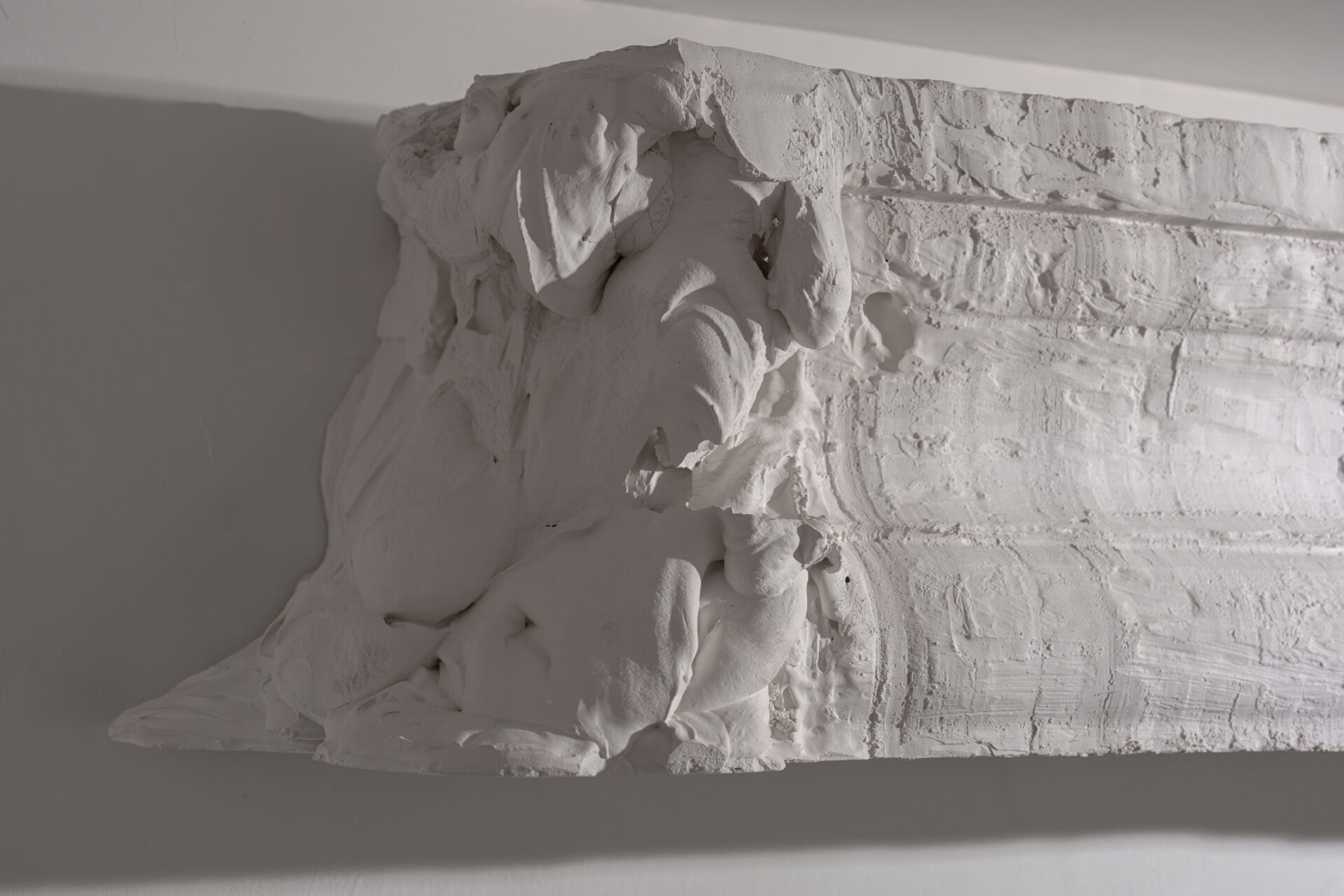
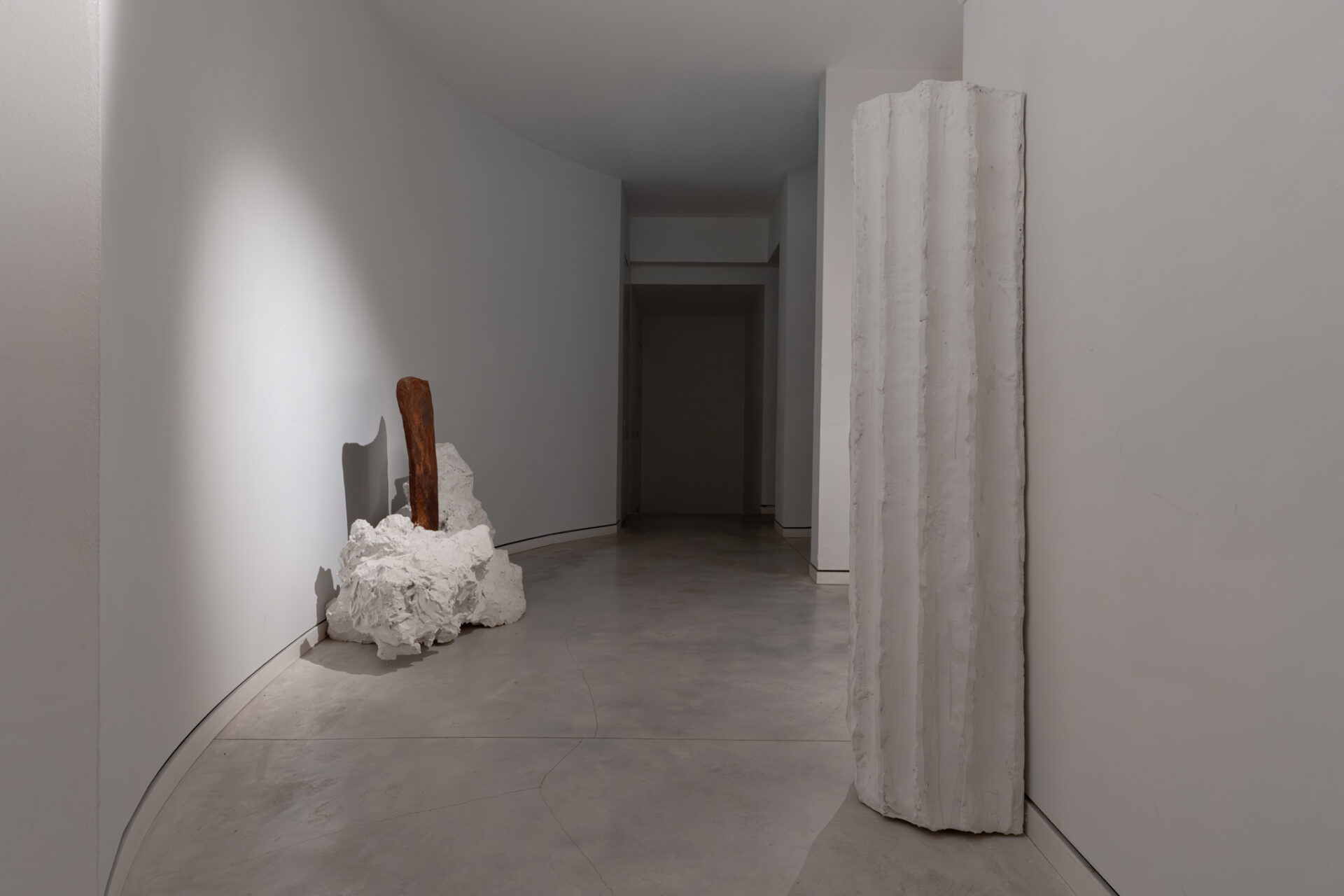
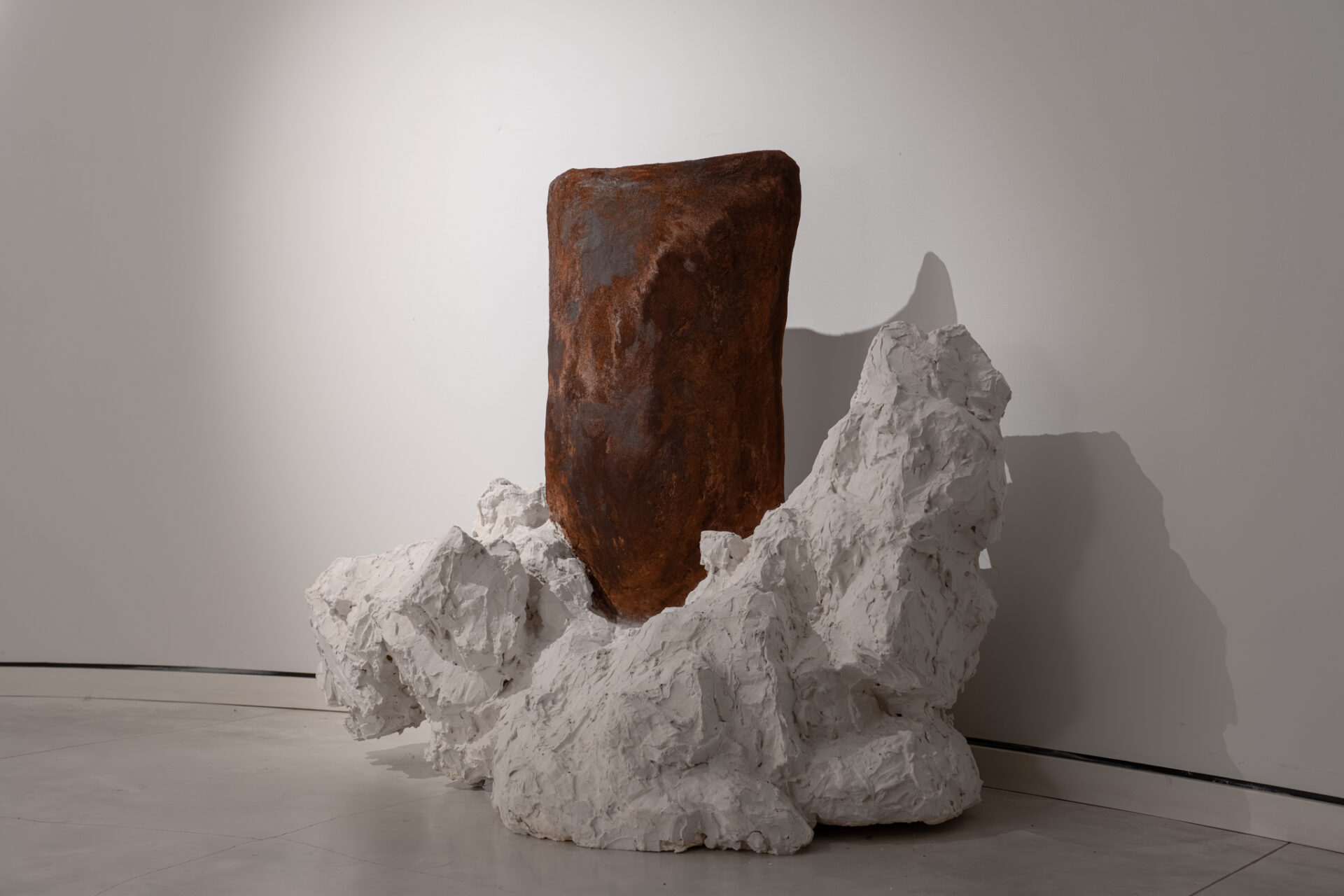
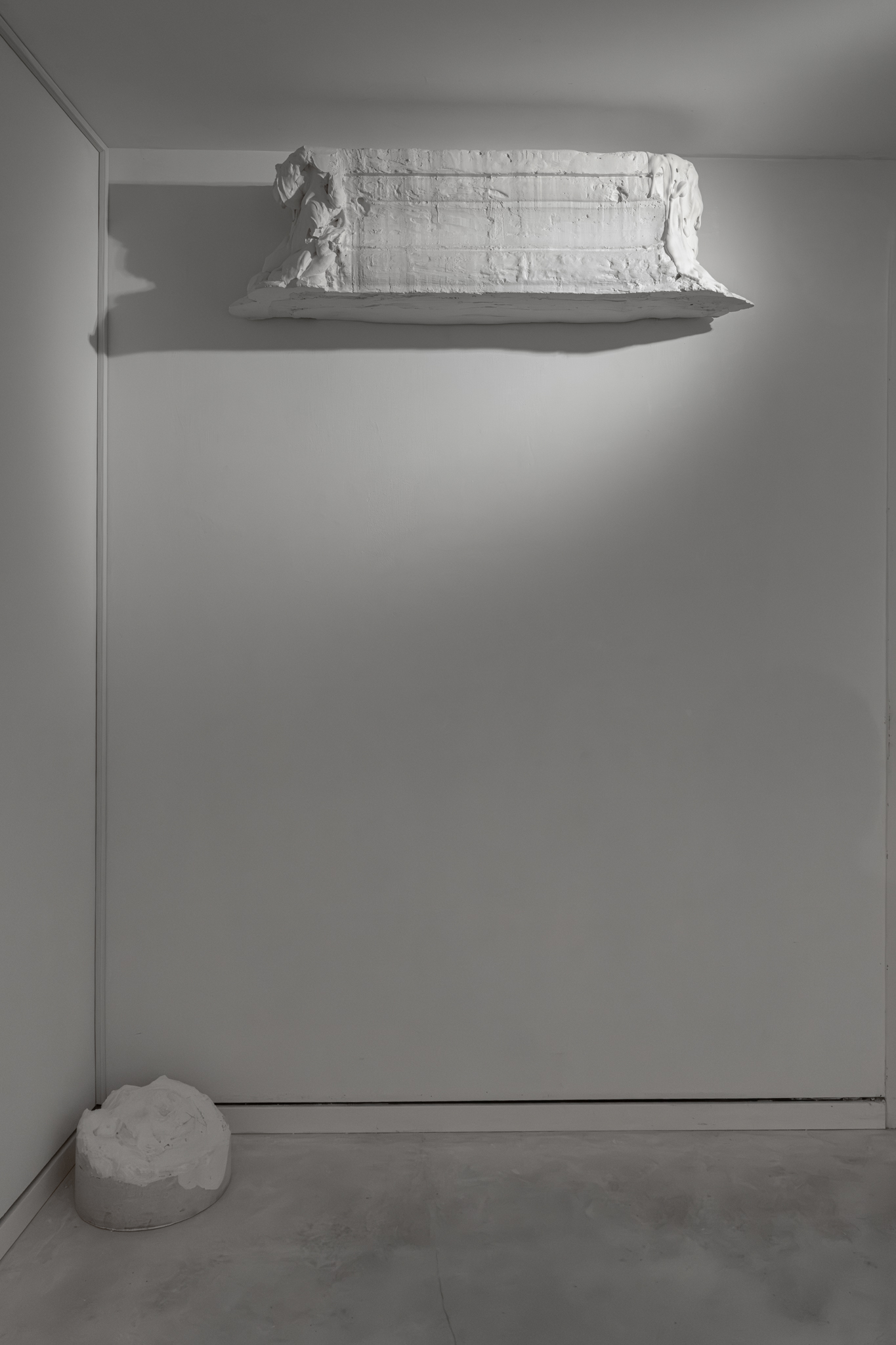
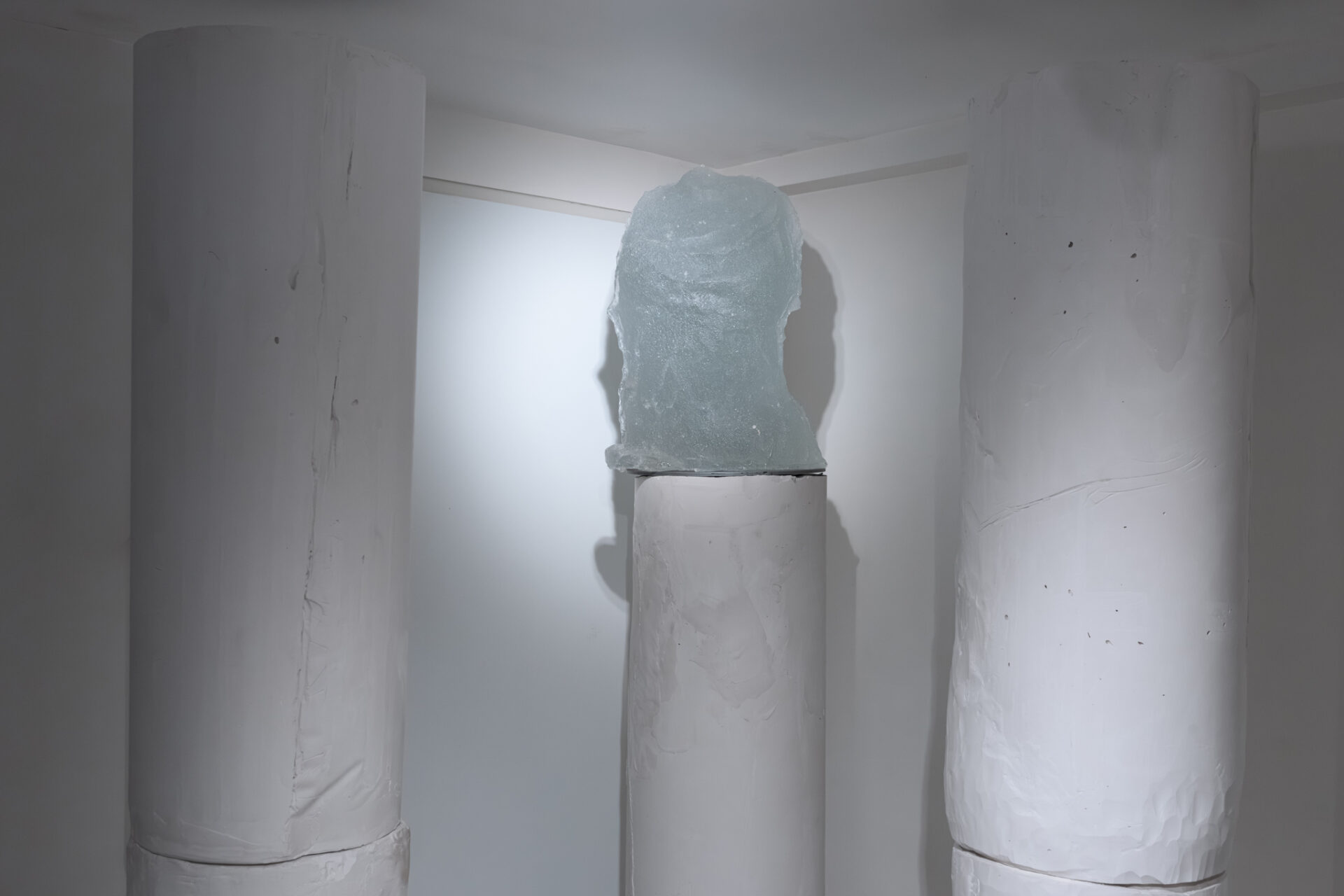
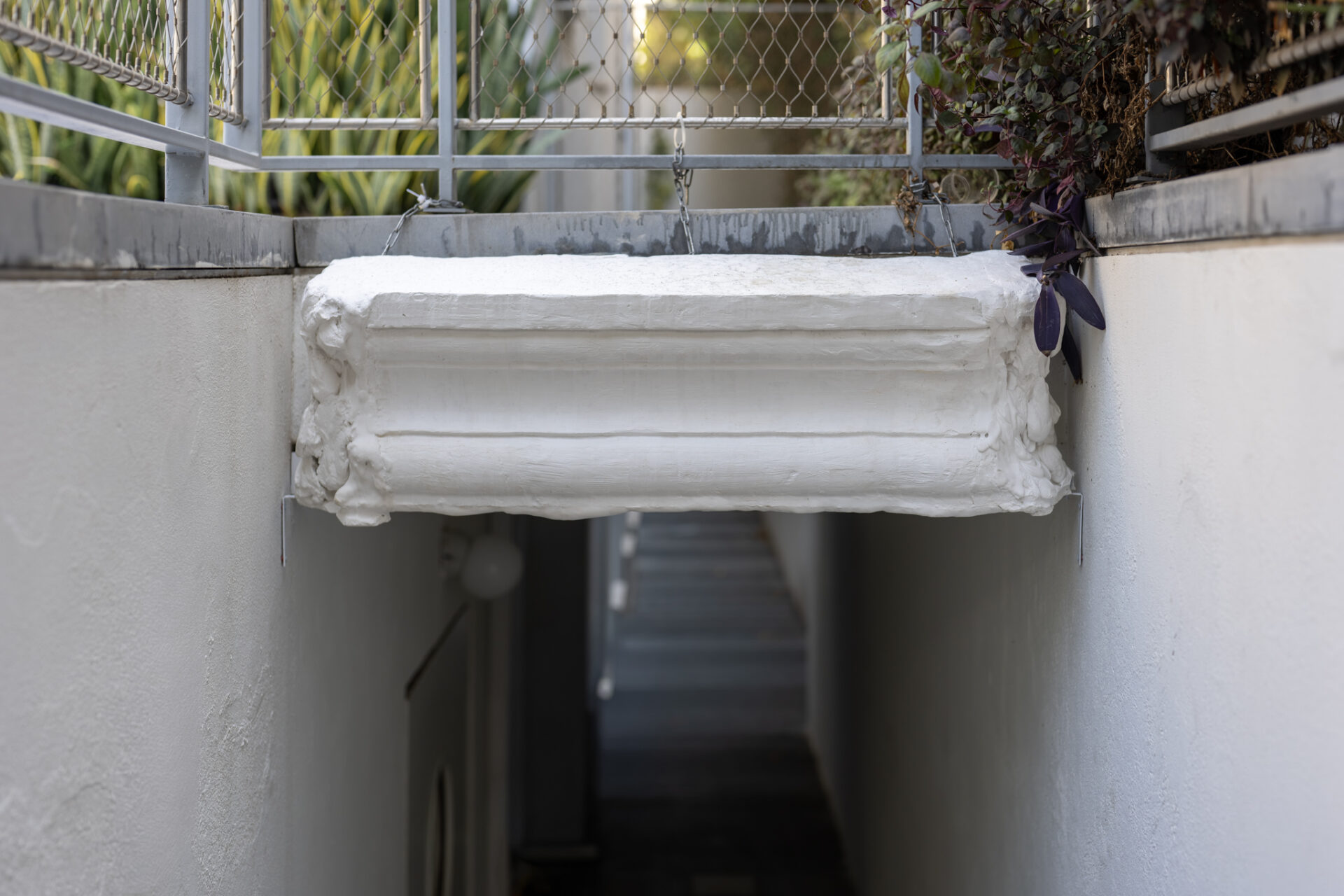
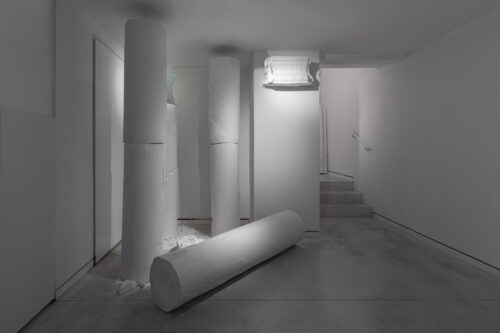
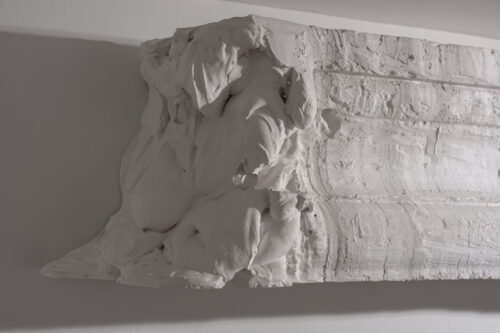
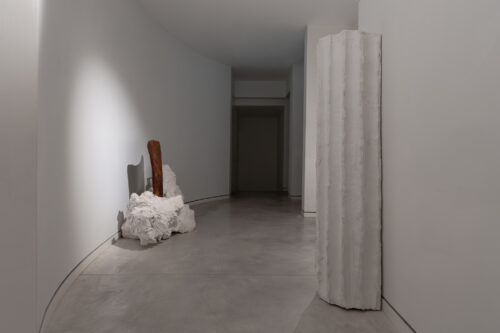
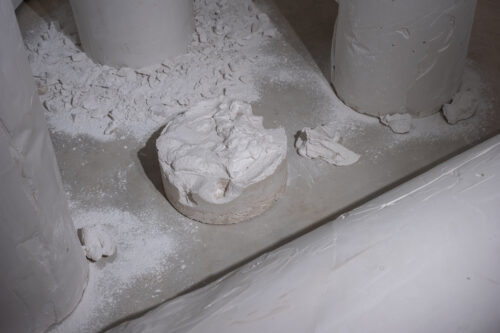
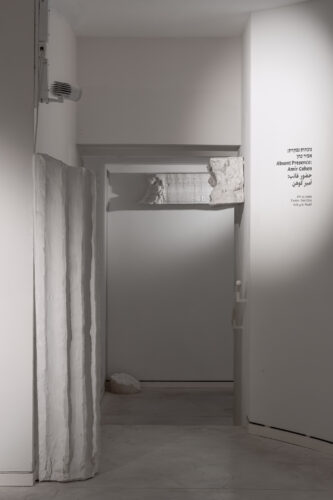
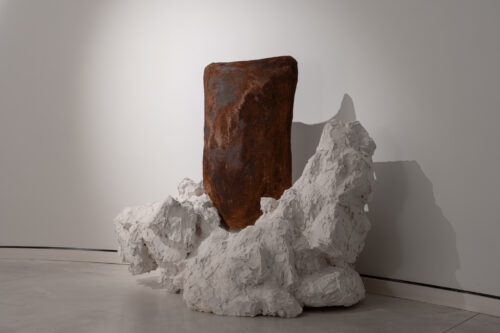
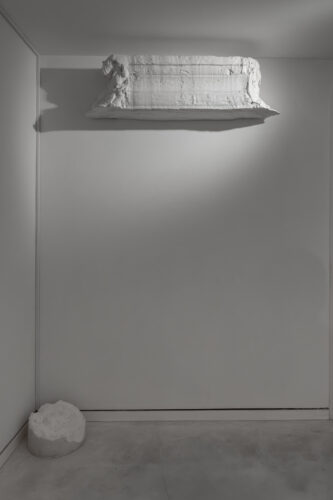
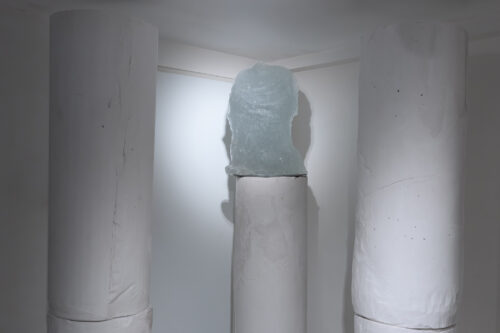
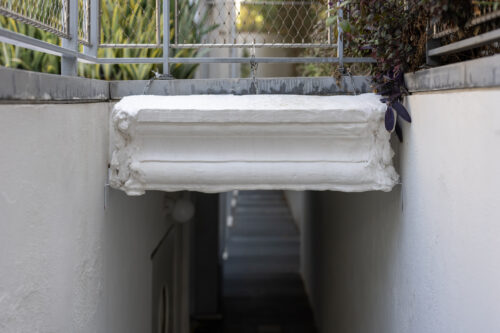
Amir Cohen’s Absent Presence emerges out of that lingering. In its space, we see images identified with power, protection, and triumph; shields, architectural remnants, and the Greek mythological figure of Nike. However, these images do not recur as self-confident monuments. They appear after the fact, after the moment of glory, with her shape still present, but her confidence shattered. They do not face time but bear its marks. Perhaps this is why the images are not experienced as remnants of a distant past. Despite their mythological origin, they seem surprisingly close. They no longer belong to the world of heroes and gods, but to a world of bodies that bear weight. The distance between monumental and personal shrinks, and the myth is no longer about larger-than-life figures but about human beings.
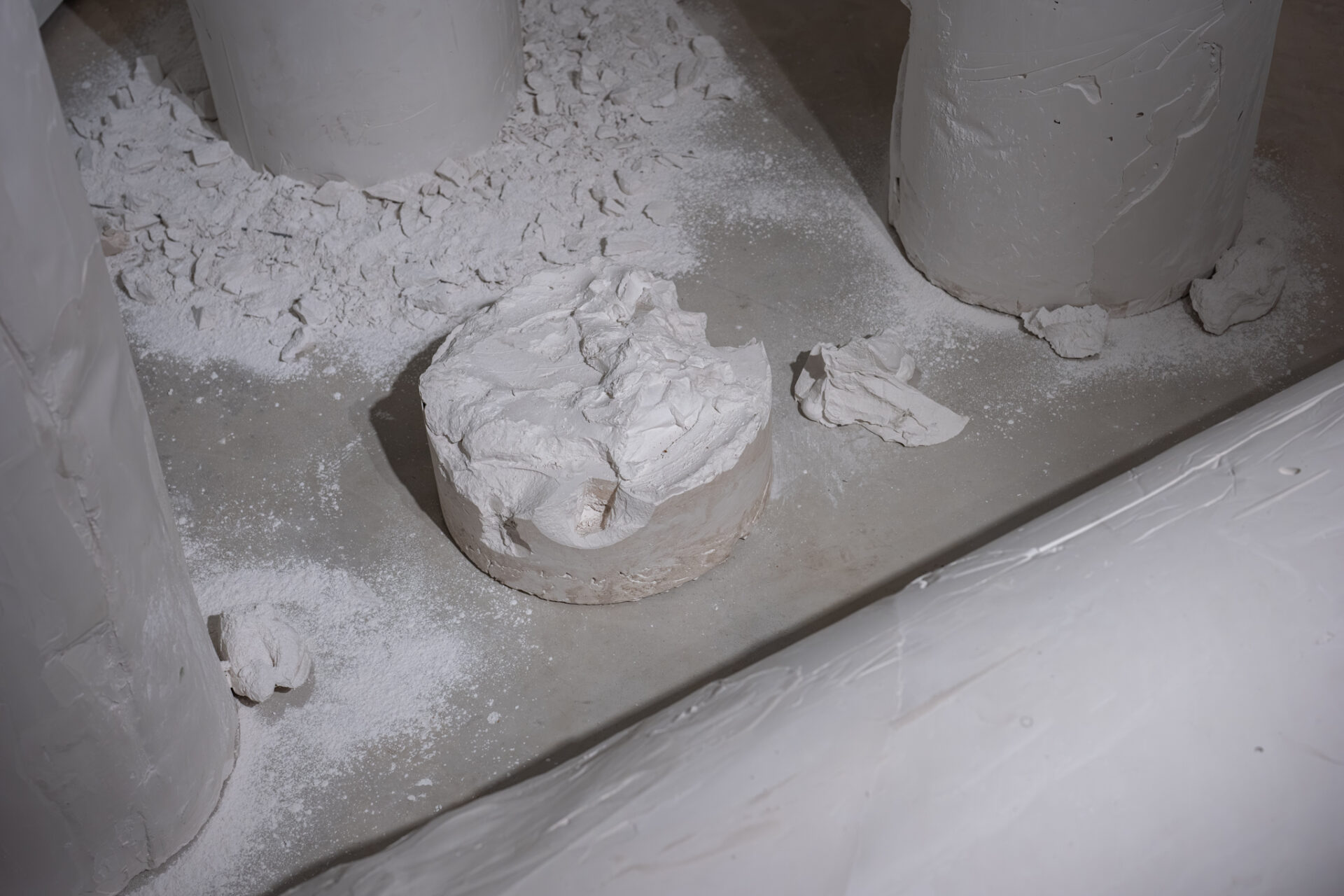
Glass and plaster blend into familiar molds, but do not retrieve them as they were. Something changes en route. The images are still familiar, but they come from elsewhere. Like a memory retrieved after years, carrying what is spared and what is lost, close enough to be identified, too far to return. The excavation does not occur only in the matter. Some things remain close to the surface, while others sink deeper. Some clearly reappear, others flicker for a moment before they disappear. Like layers crammed on top of one another, matter too holds signs of what has happened through it. Not everything can be deciphered, not every footstep retraceable.
Light is fleetingly captured in the glass and then changes with each movement in space. The plaster retains signs of contact, as if something has been imprinted and retained within it. The materials do not tell the story in our stead but refuse to completely forget it. The monument does not vanish but loses its safe distance. It approaches the body, the wound, the place where that which is broken keeps resonating.
Within the whiteness of space, between mold and remainder, between trace and scar, something keeps pulsing mutely. Not a victory speech, but a lingering echo of what time and distance have failed to erase.
Trauma is hell on earth. Trauma resolved is a gift from the gods. A heroic journey that belongs to all of us.
Peter A. Levine and Ann Frederick, Waking the Tiger.