-
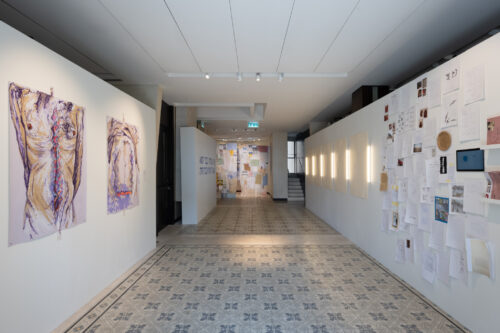 Installation view
Photography: Daniel Hanoch -
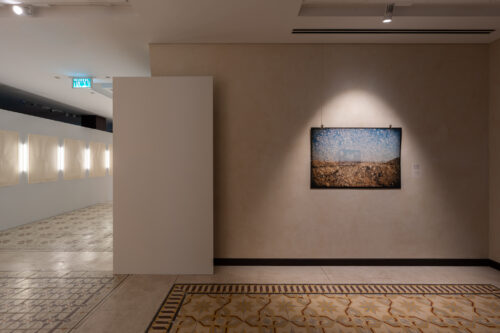 Installation view
Photography: Daniel Hanoch -
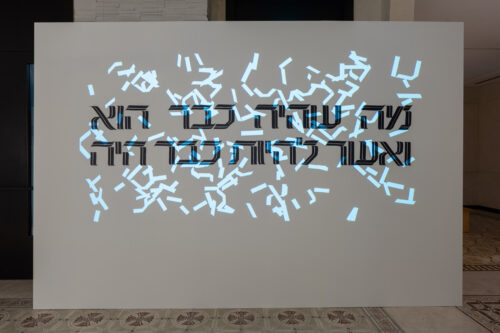 Rotem Finkelstein –> Nadav Feiner –> Ron Shahar –> Michal Karniely –> Roni Ben Porat –> David Mottahedèh –> Sheli Piha
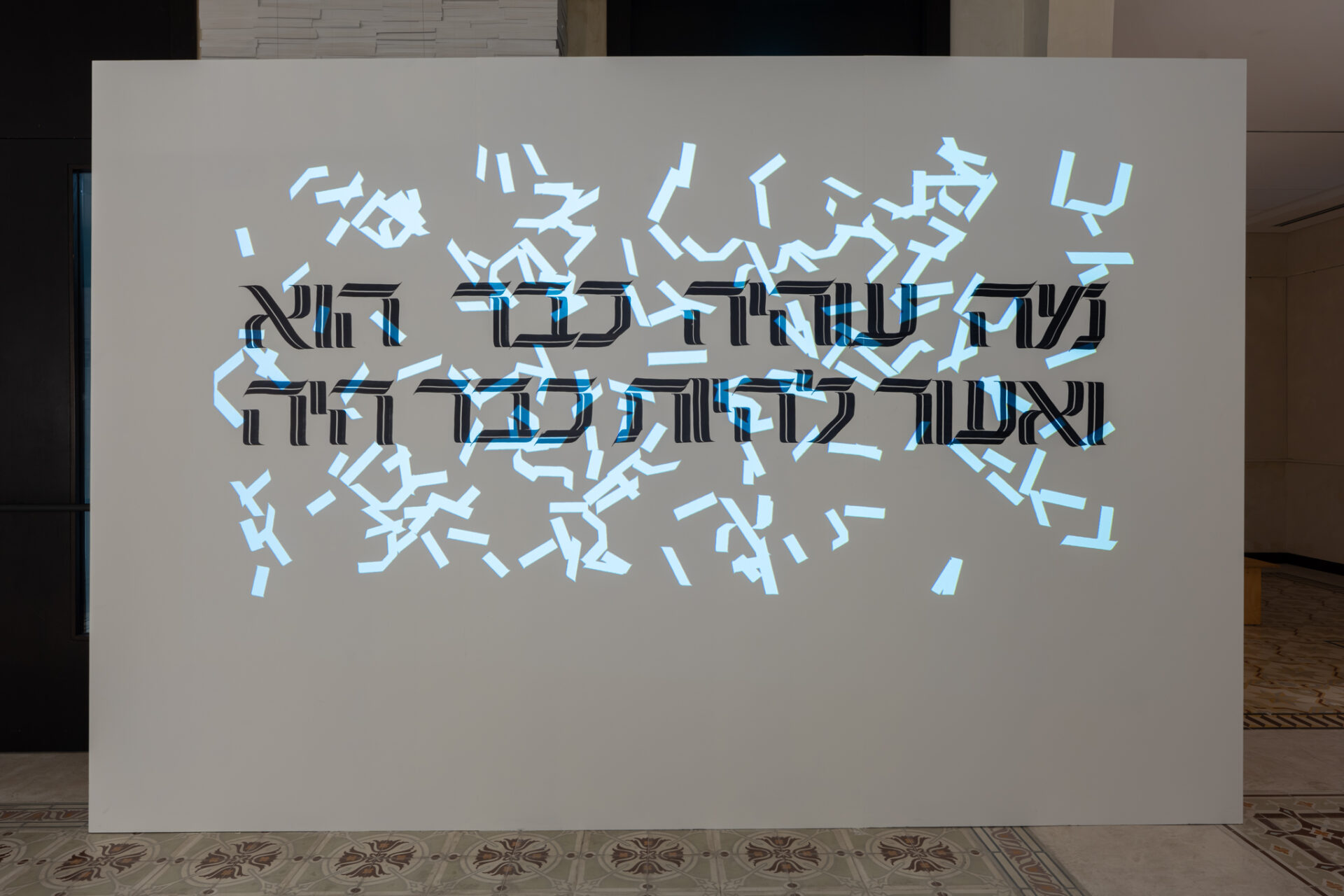
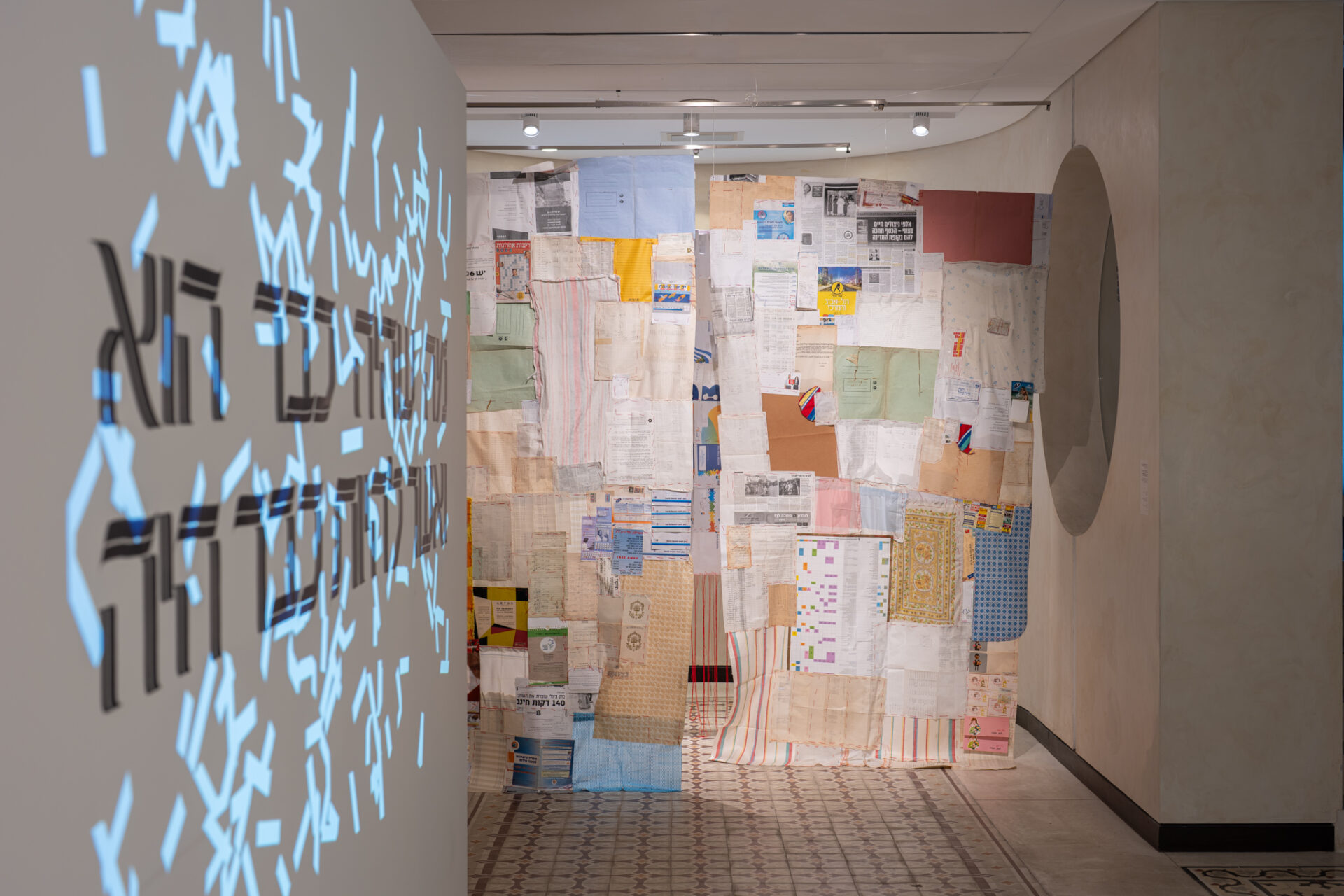
Living Again, 2026, digital projection and acrylic on wall, dimensions variable
Original font used in the work: “Haim” by Fontimonim
Photography: Daniel Hanoch -
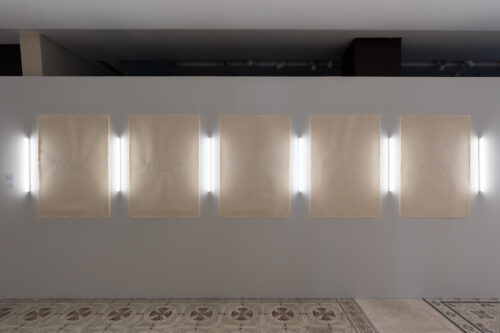 Michal Karniely –> Ron Shahar –> David Mottahedèh –> Rotem Finkelstein –> Nadav Feiner –> Sheli Piha –> Roni Ben Porat
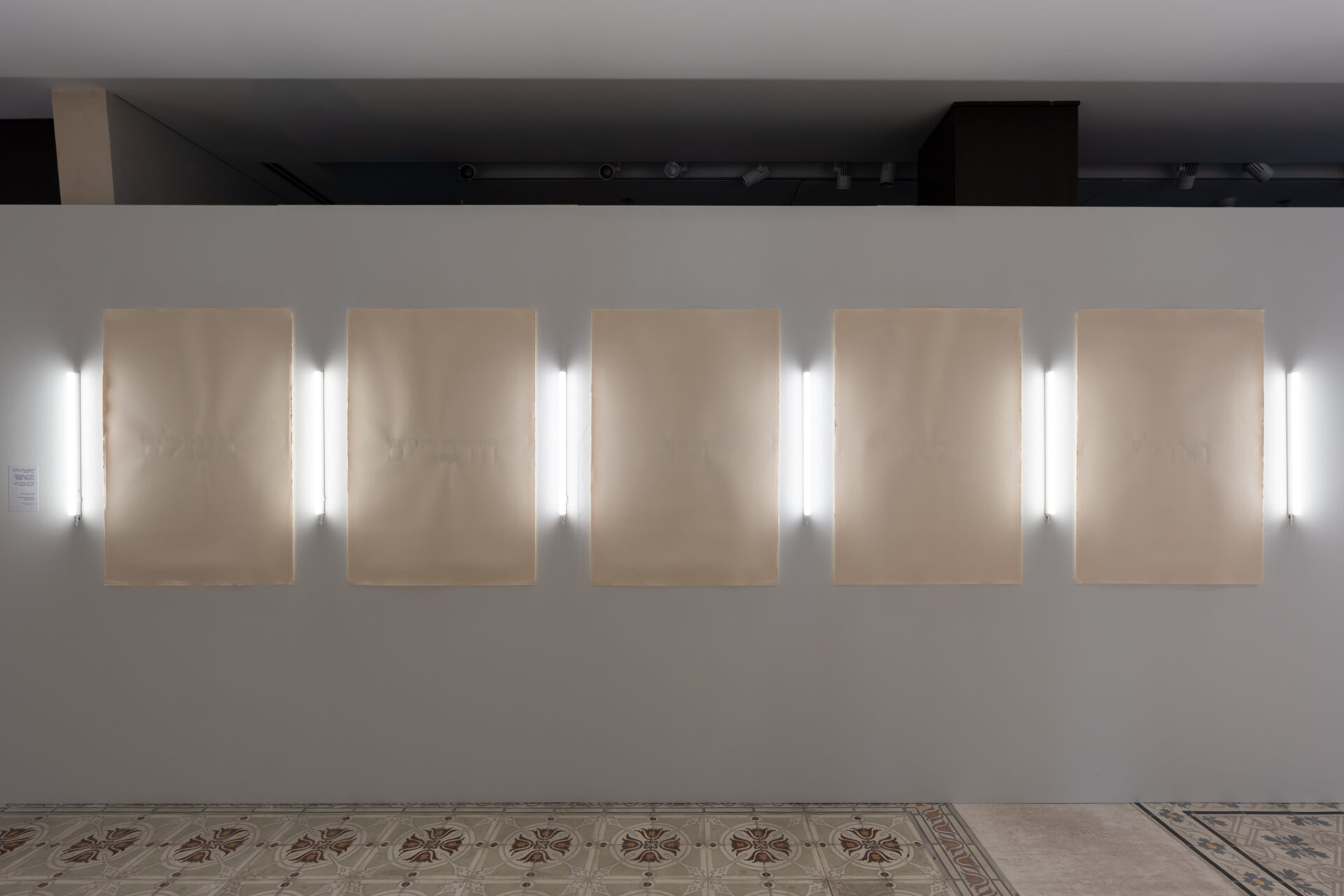
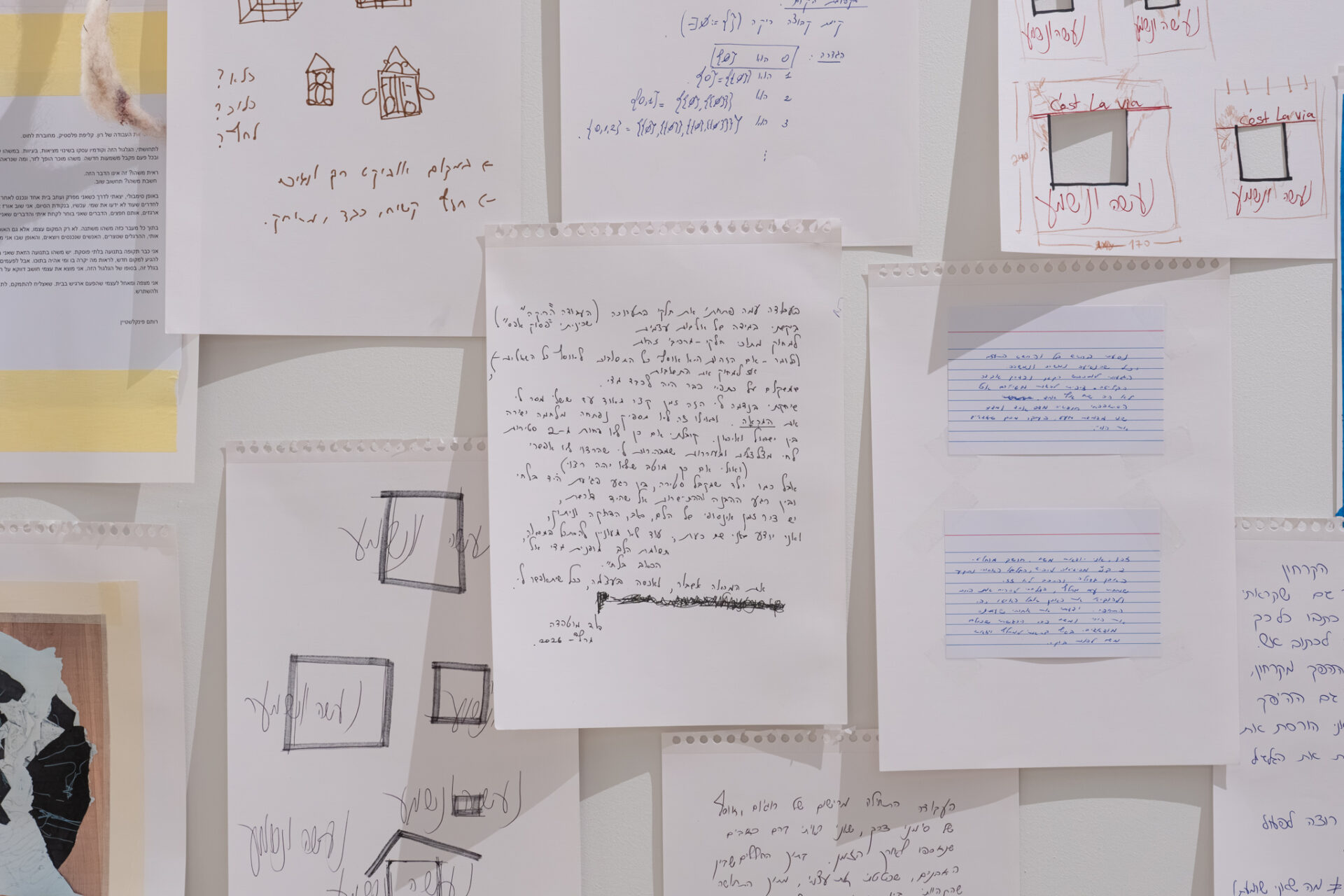
And Perhaps These Things Never Happened at All, 2026, ink on paper, 76x112 cm
Photography: Daniel Hanoch -
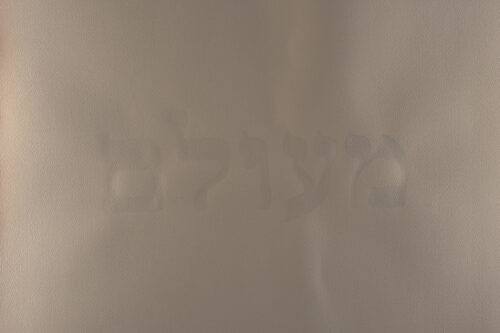 Michal Karniely –> Ron Shahar –> David Mottahedèh –> Rotem Finkelstein –> Nadav Feiner –> Sheli Piha –> Roni Ben Porat
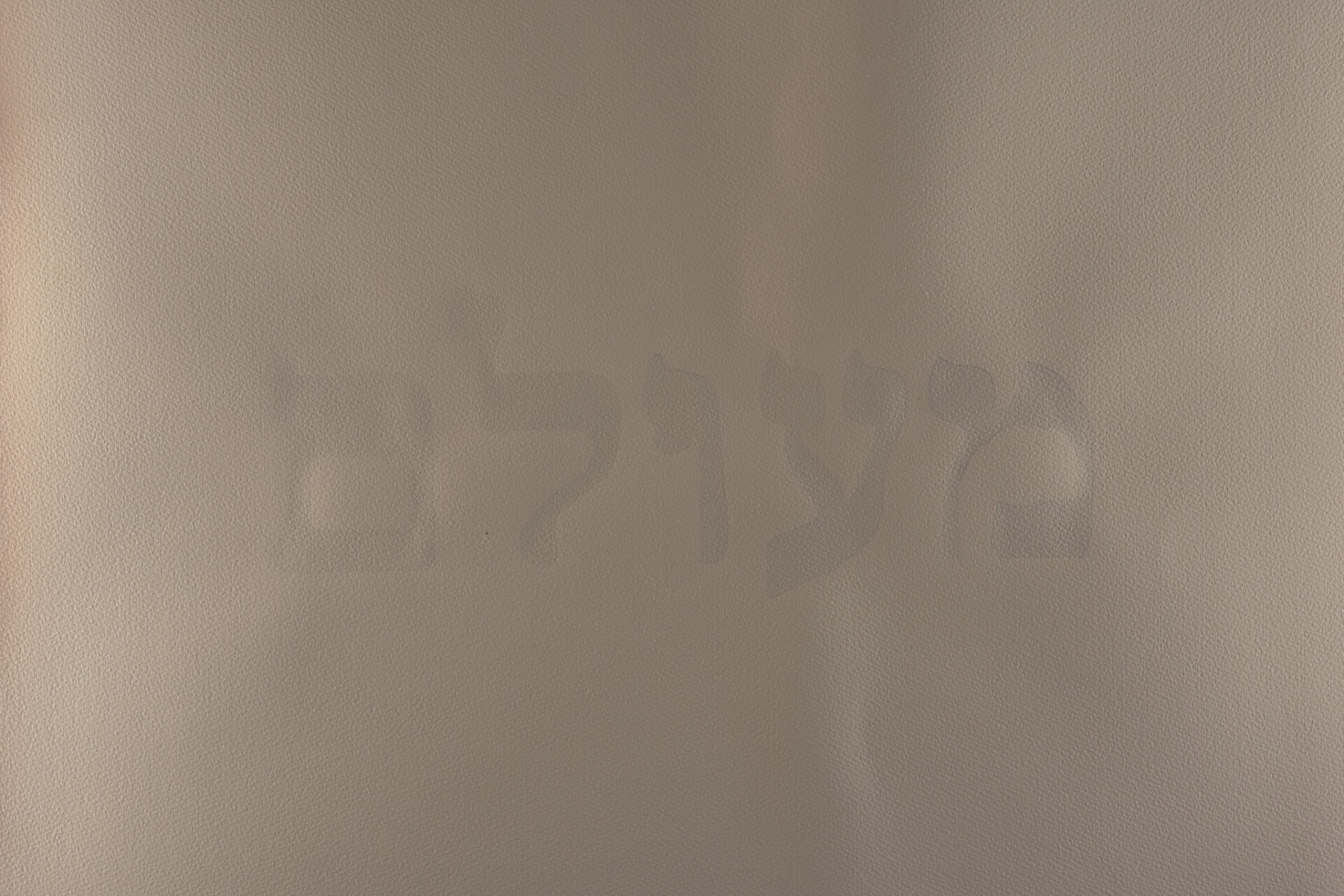
And Perhaps These Things Never Happened at All, detail, 2026, ink on paper, 76x112 cm
Photography: Daniel Hanoch -
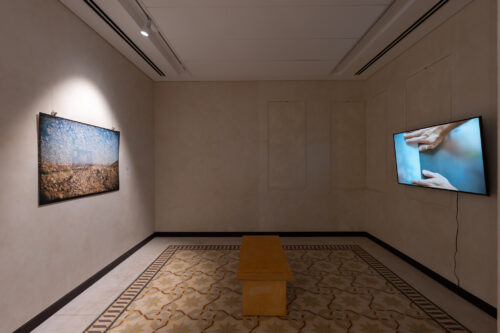 Installation view
Photography: Daniel Hanoch -
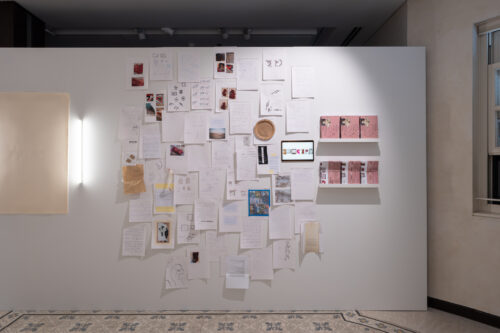 Installation view
Photography: Daniel Hanoch -
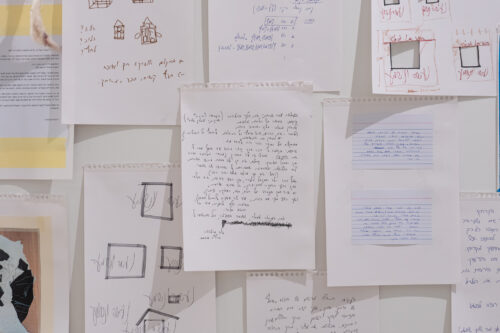 Installation view
Photography: Daniel Hanoch -
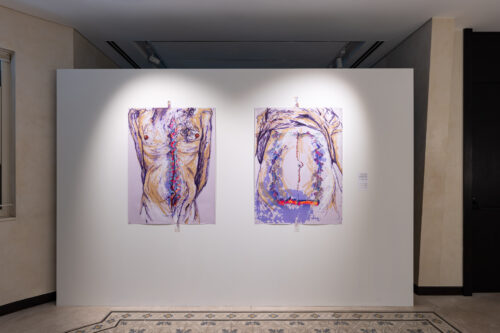 David Mottahedèh –> Roni Ben Porat –> Michal Karniely –> Sheli Piha –> Ron Shahar –> Rotem Finkelstein –> Nadav Feiner
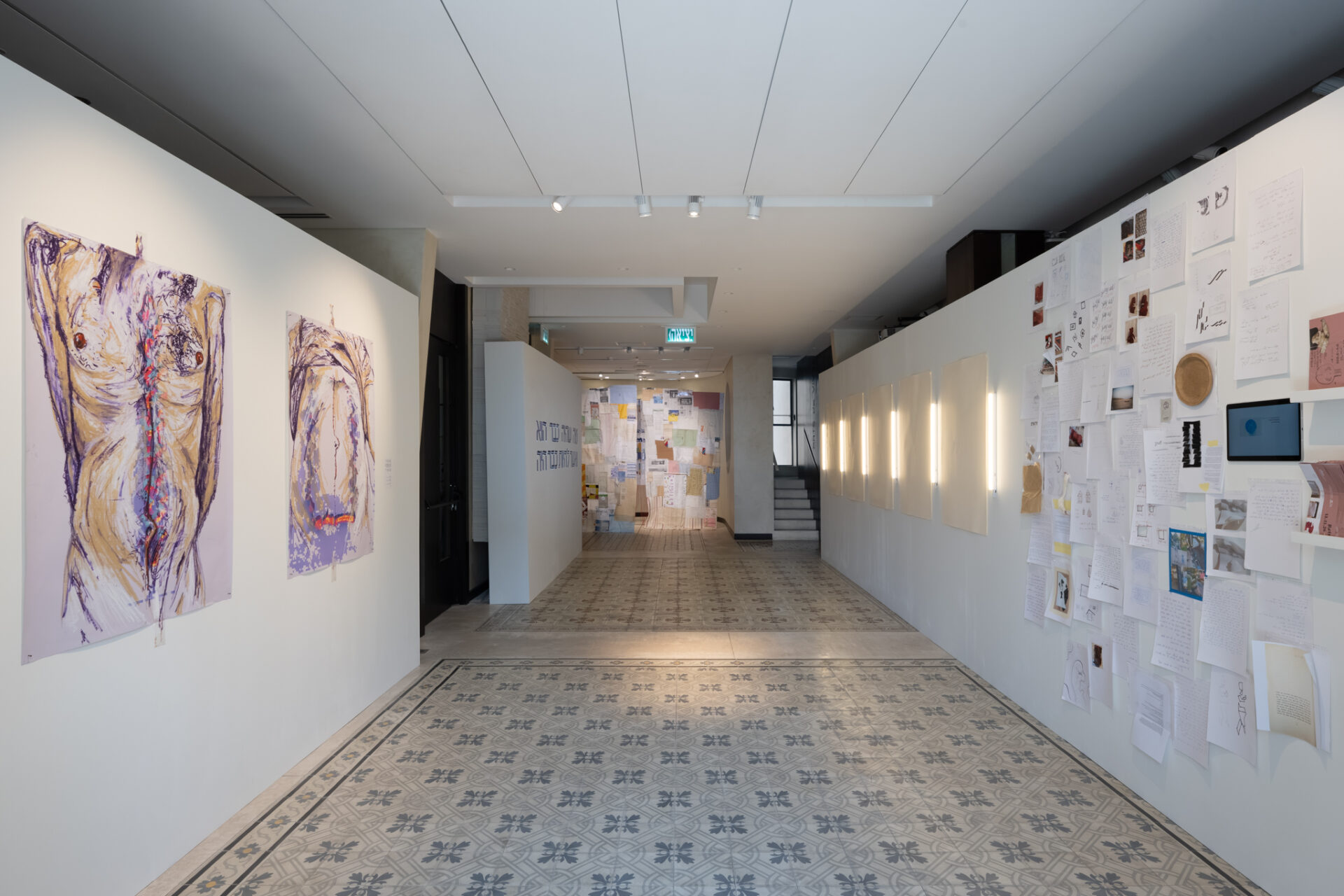
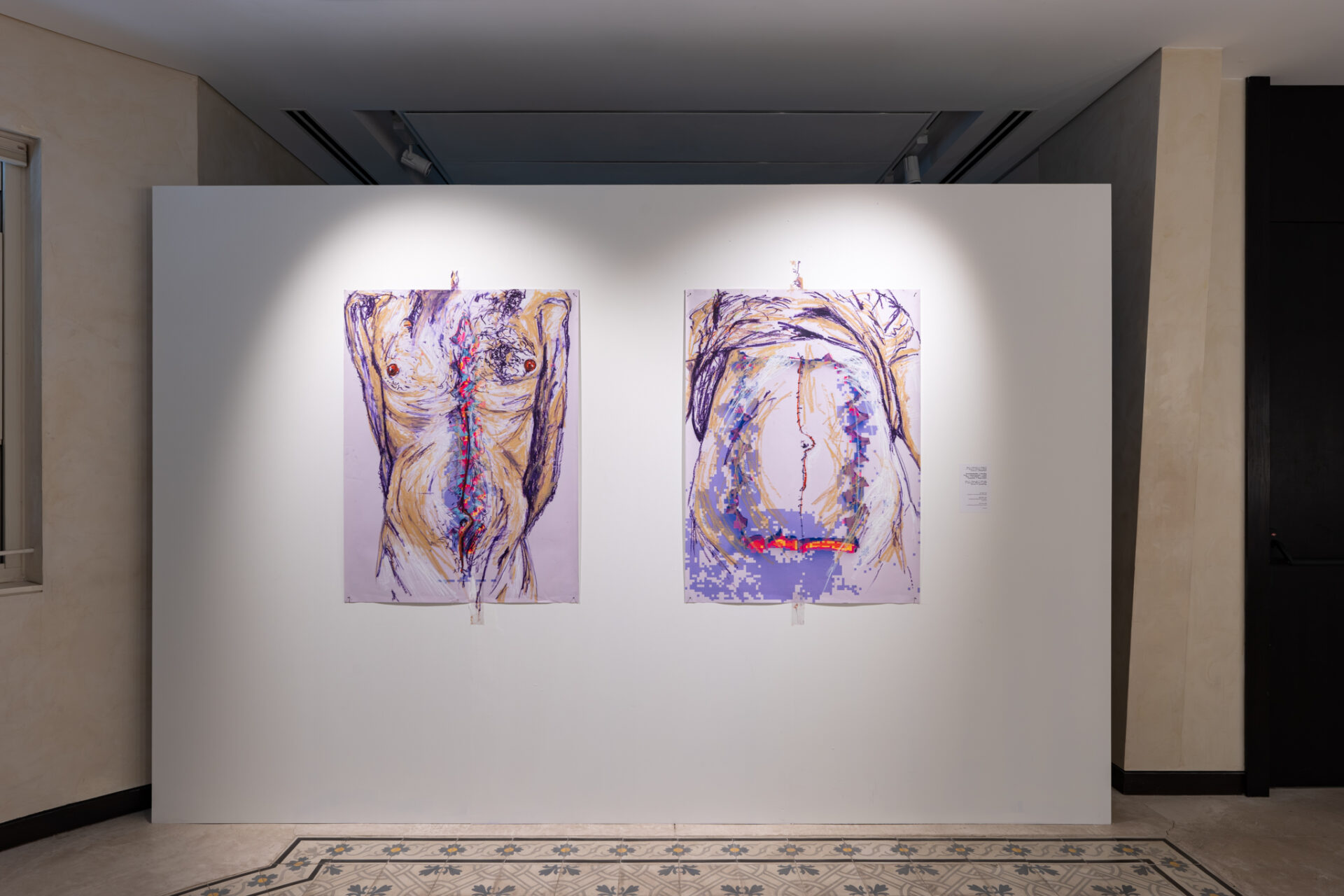
One-Zero, 2026, oil pastel and digital print on paper, 80x120 cm
Photography: Daniel Hanoch -
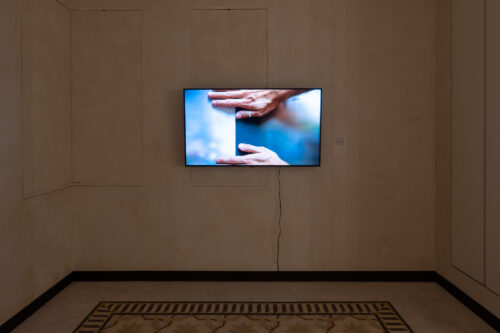 Nadav Feiner –> Michal Karniely –> Roni Ben Porat –> David Mottahedèh –> Sheli Piha –> Ron Shahar –> Rotem Finkelstein
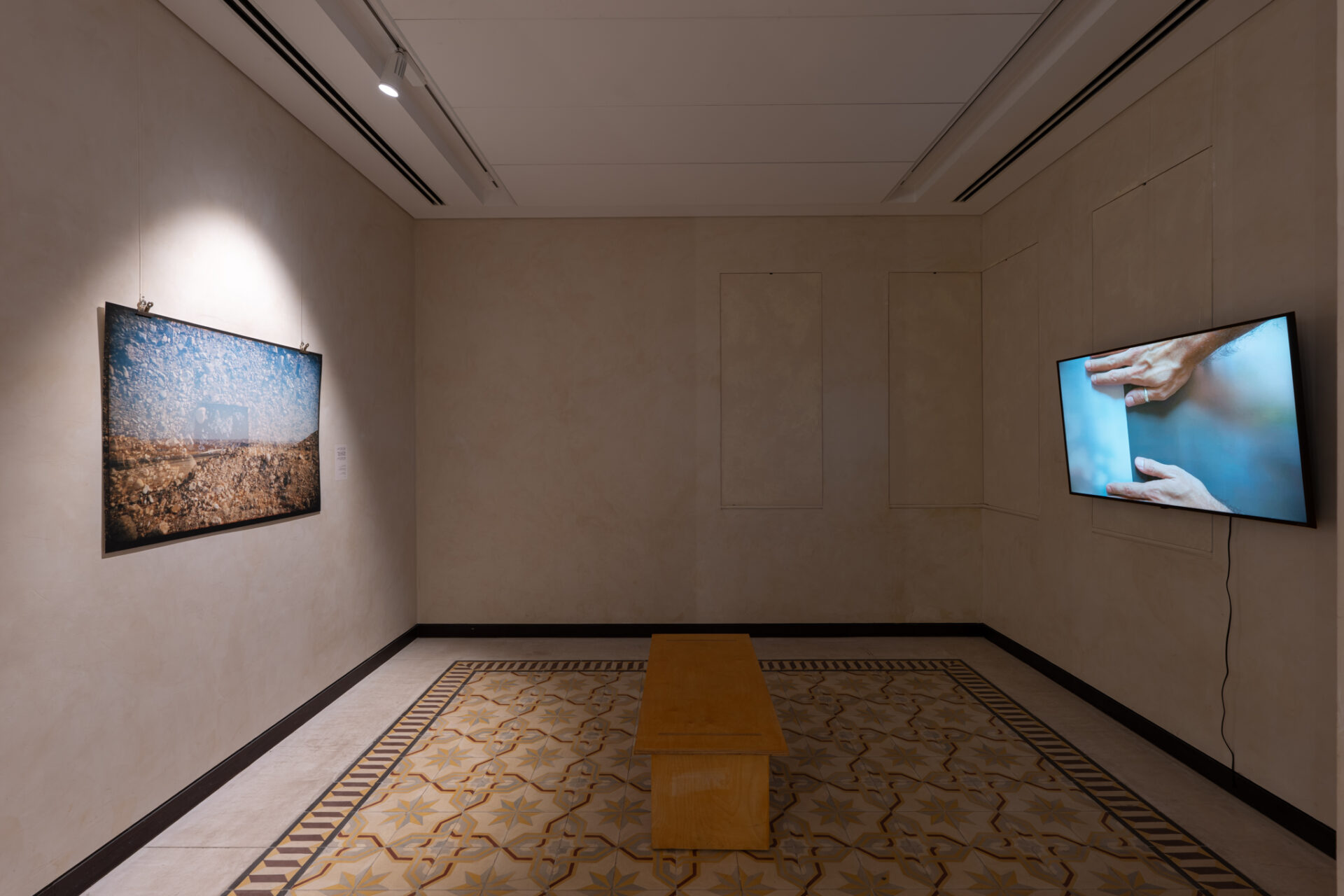
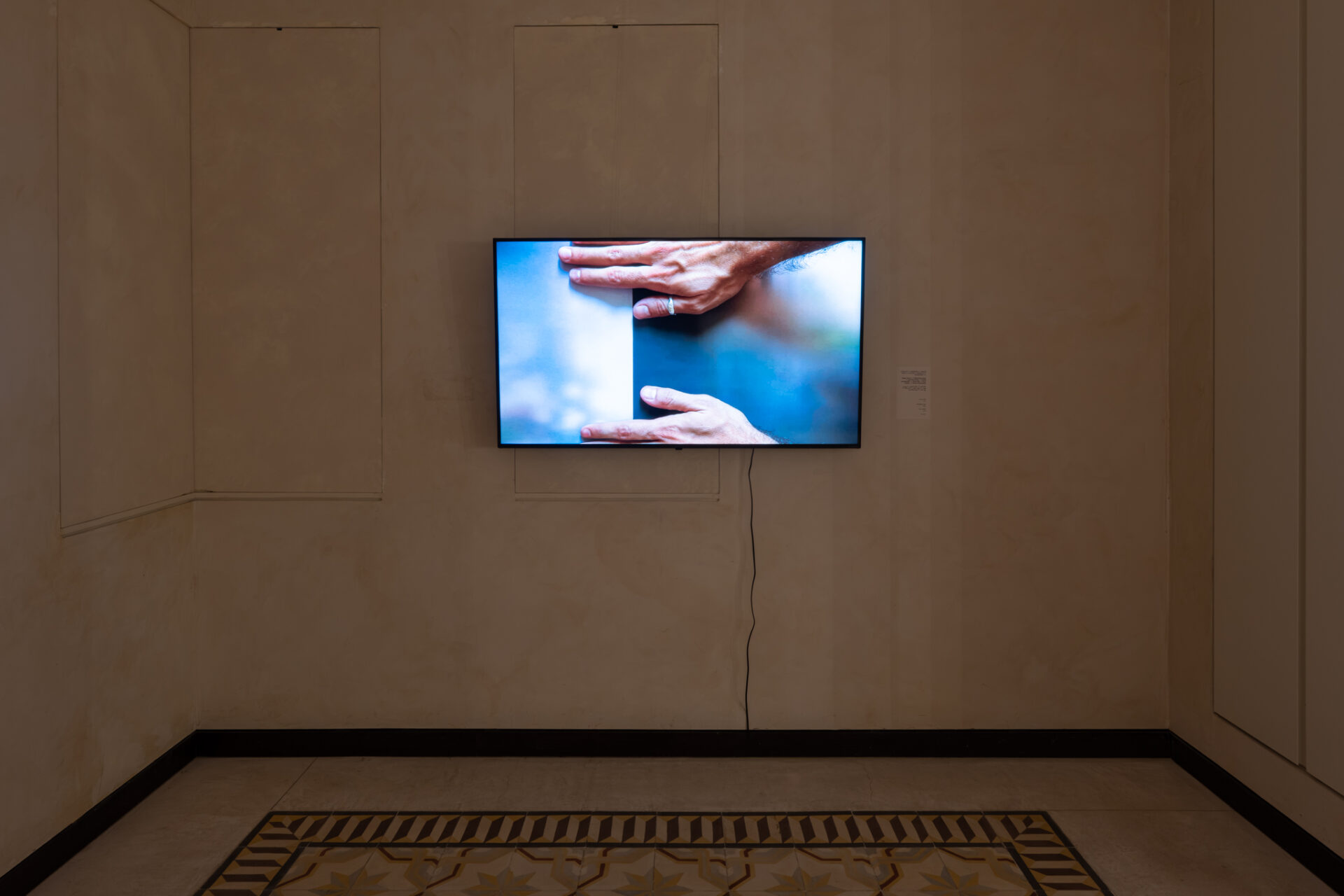
Transitions, 2026, video
Photography: Daniel Hanoch -
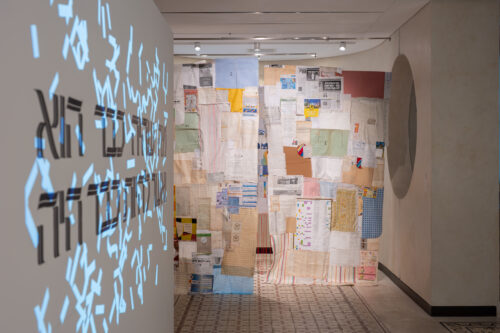 Installation view
Photography: Daniel Hanoch -
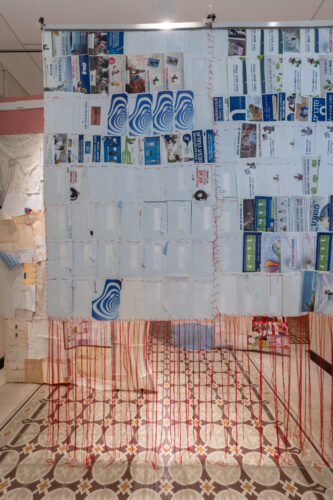 Ron Shahar –> Rotem Finkelstein –> Sheli Piha –> Roni Ben Porat –> David Mottahedèh –> Nadav Feiner –> Michal Karniely
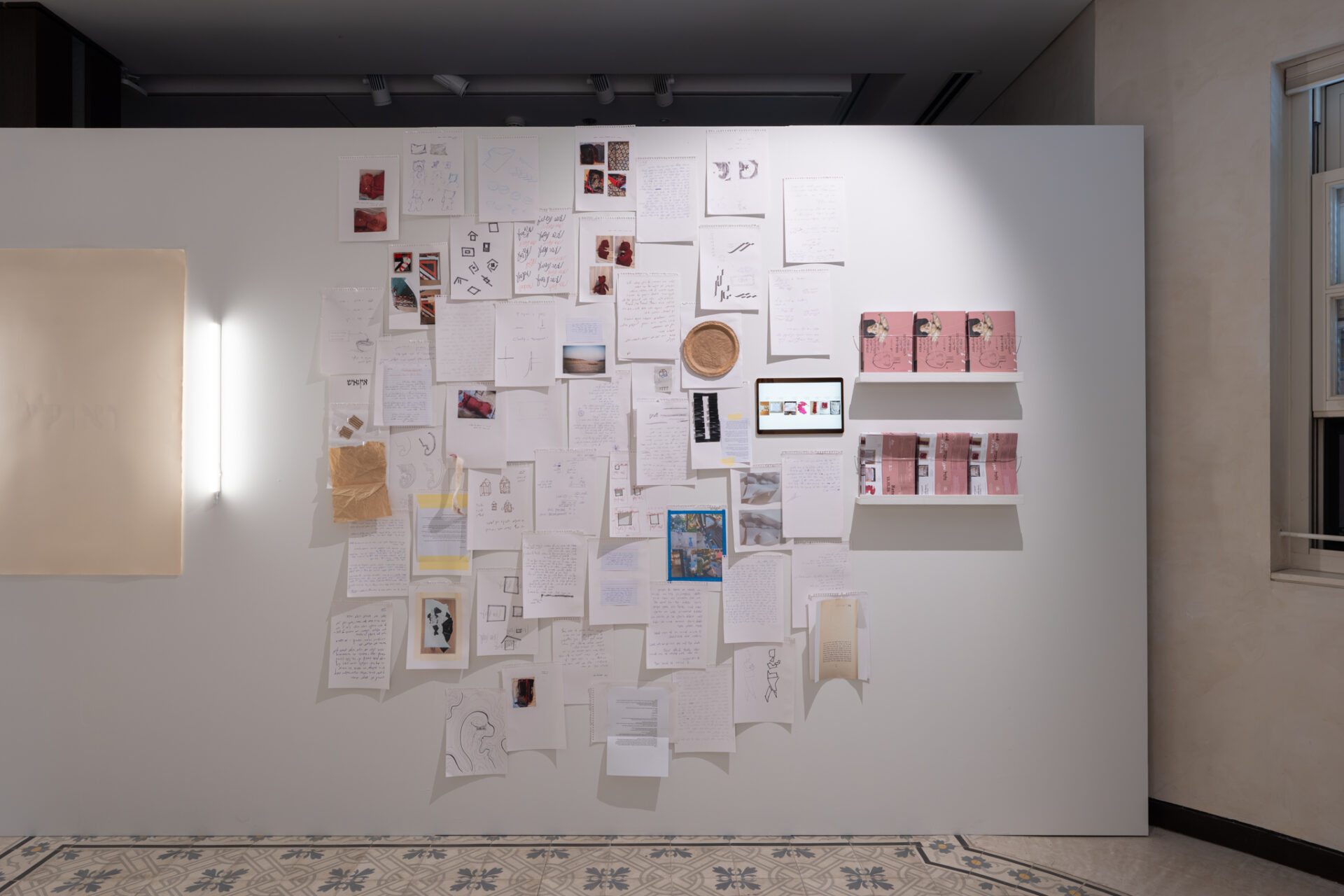
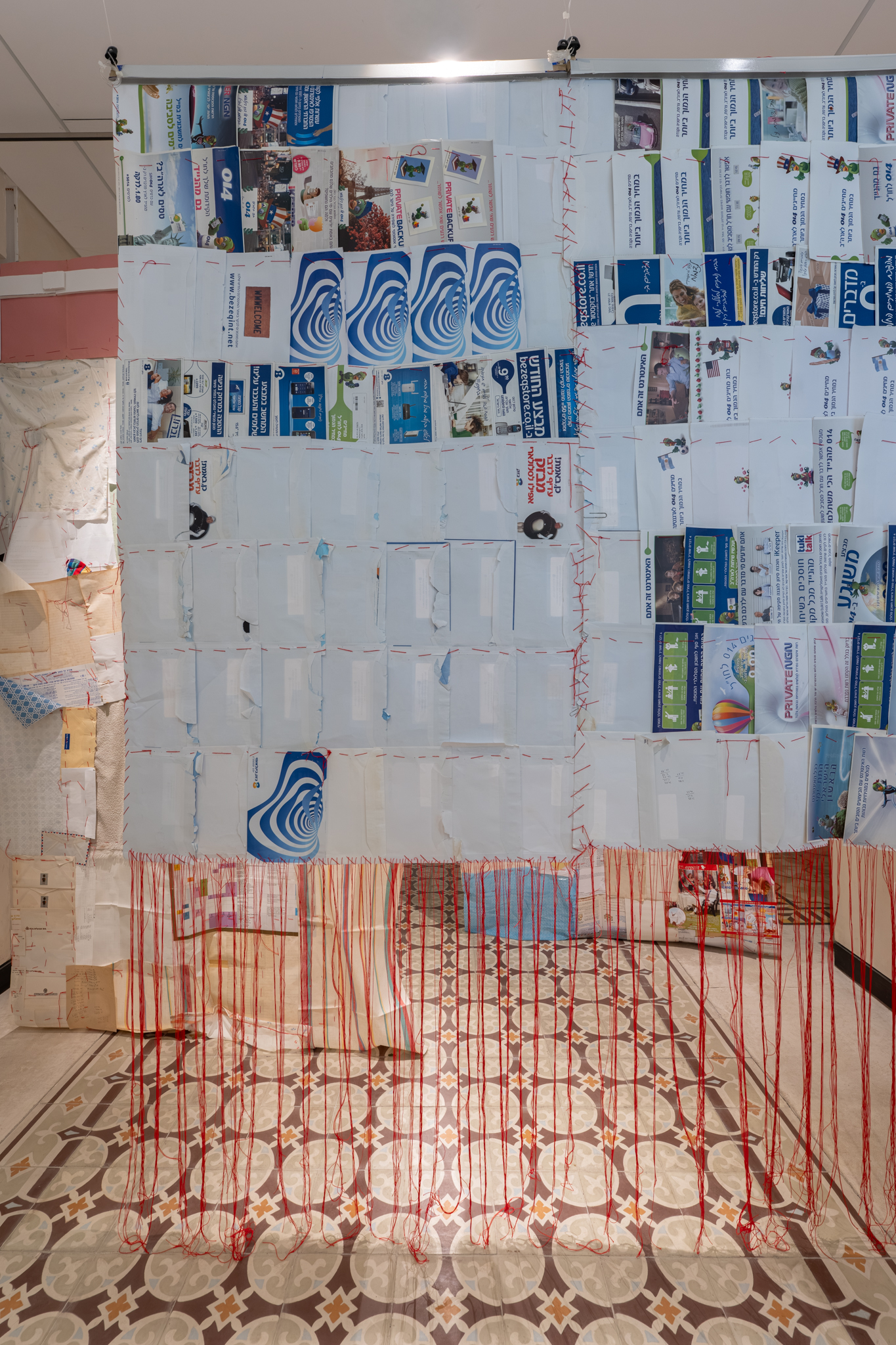
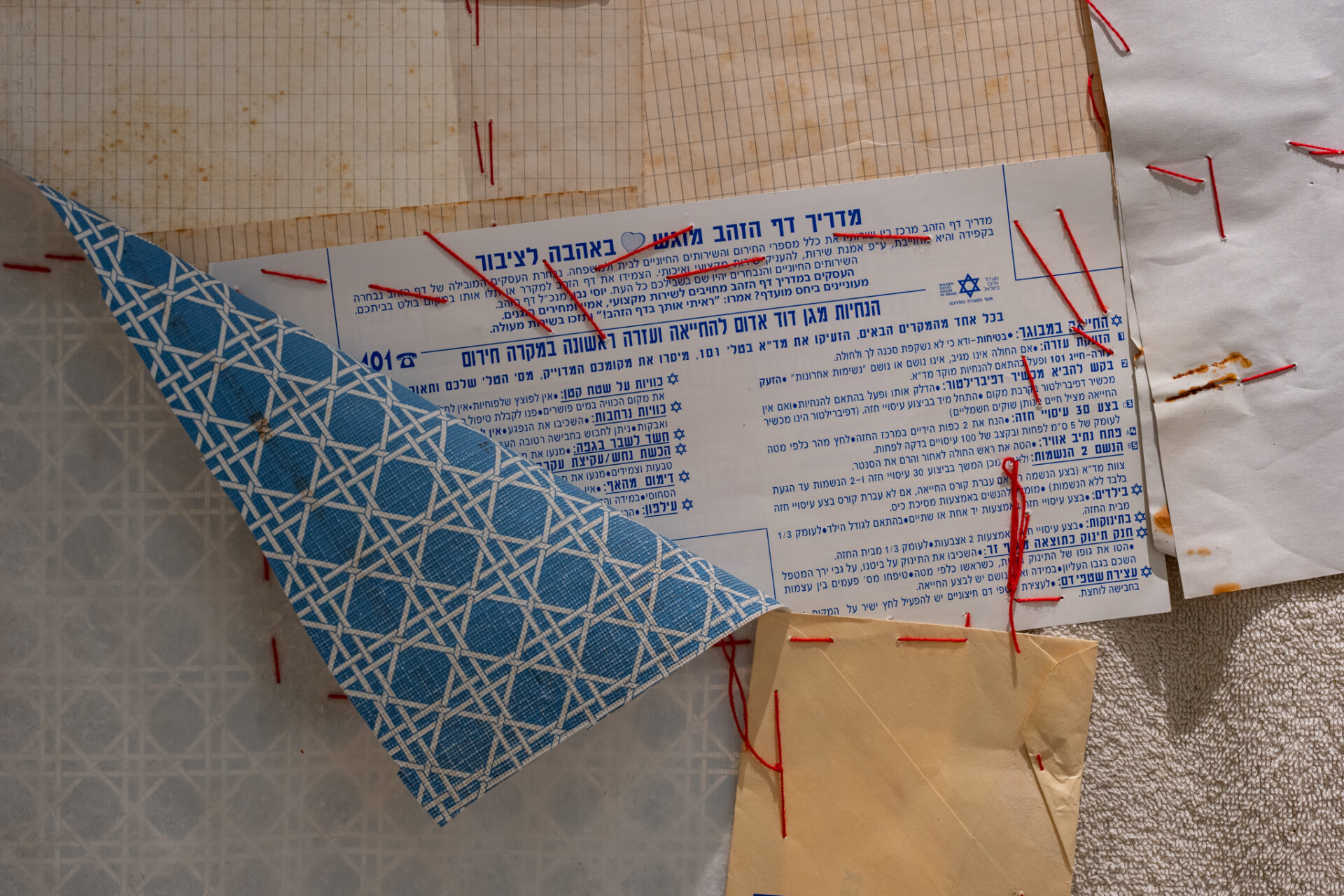
Home, detail, 2026, hand stitching, paper, fabric, dimensions variable
Photography: Daniel Hanoch -
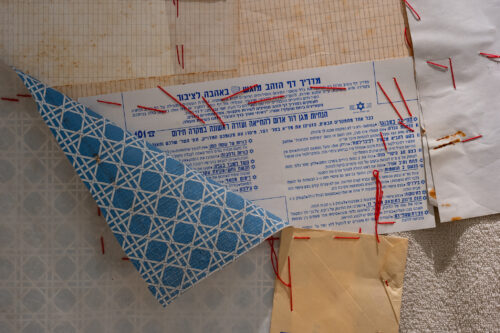 Ron Shahar –> Rotem Finkelstein –> Sheli Piha –> Roni Ben Porat –> David Mottahedèh –> Nadav Feiner –> Michal Karniely
Home, detail, 2026, hand stitching, paper, fabric, dimensions variable
Photography: Daniel Hanoch -
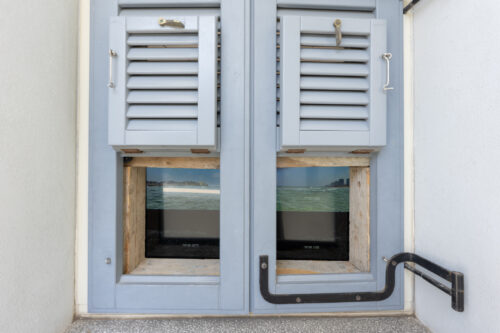 Roni Ben Porat –> Sheli Piha –> Nadav Feiner –> Ron Shahar –> Rotem Finkelstein –> Michal Karniely –> David Mottahedèh
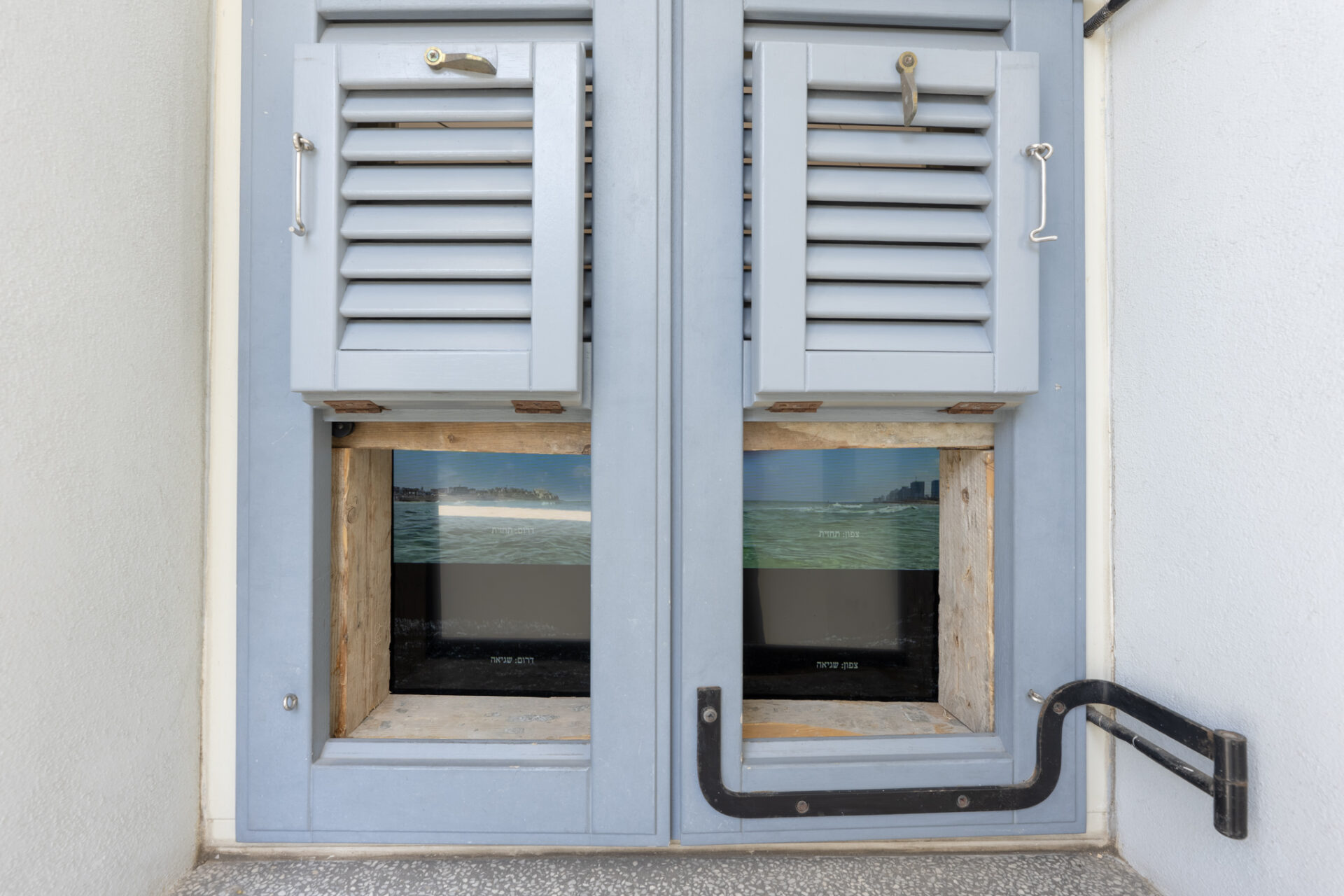
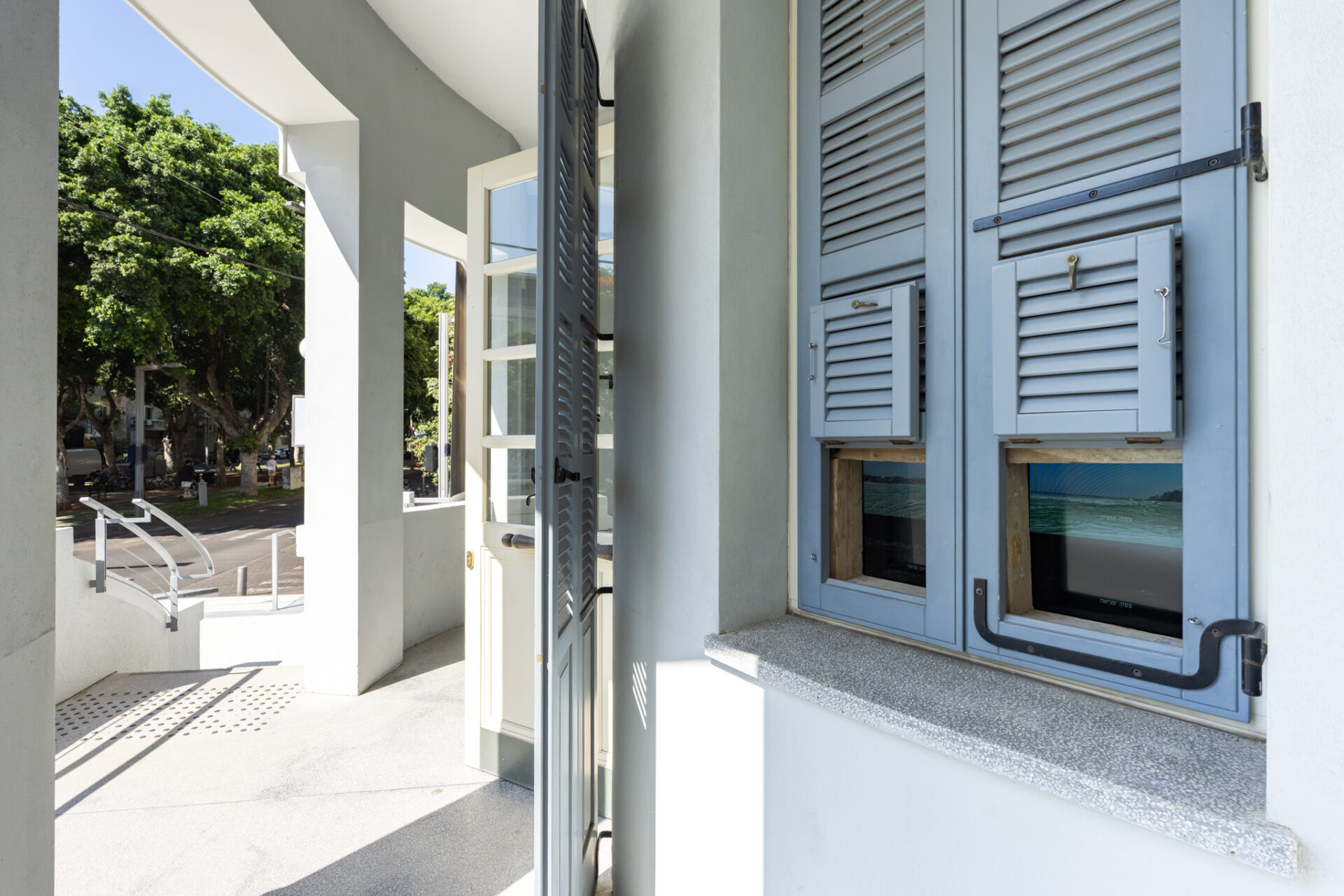
Approaches to Forecasting the Mediterranean, 2026, action and multimedia installation: code, statistical modeling and forecasting of field measurements, found scaffolding wood, two-channel video, dimensions variable
Photography: Daniel Hanoch -
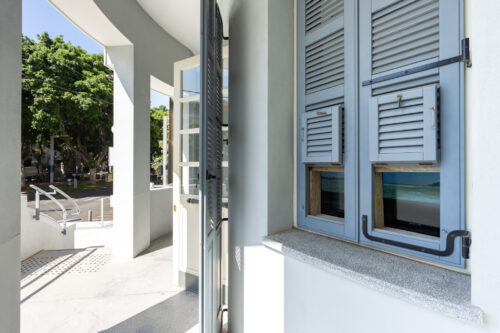 Roni Ben Porat –> Sheli Piha –> Nadav Feiner –> Ron Shahar –> Rotem Finkelstein –> Michal Karniely –> David Mottahedèh
Approaches to Forecasting the Mediterranean, 2026, action and multimedia installation: code, statistical modeling and forecasting of field measurements, found scaffolding wood, two-channel video, dimensions variable
Photography: Daniel Hanoch -
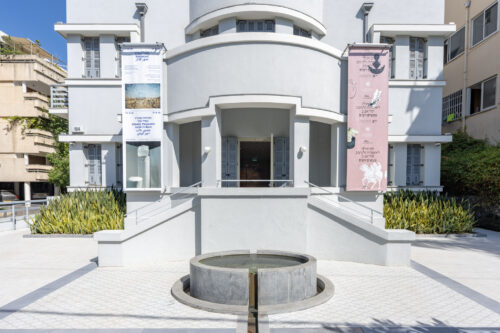 Installation view
Photography: Daniel Hanoch
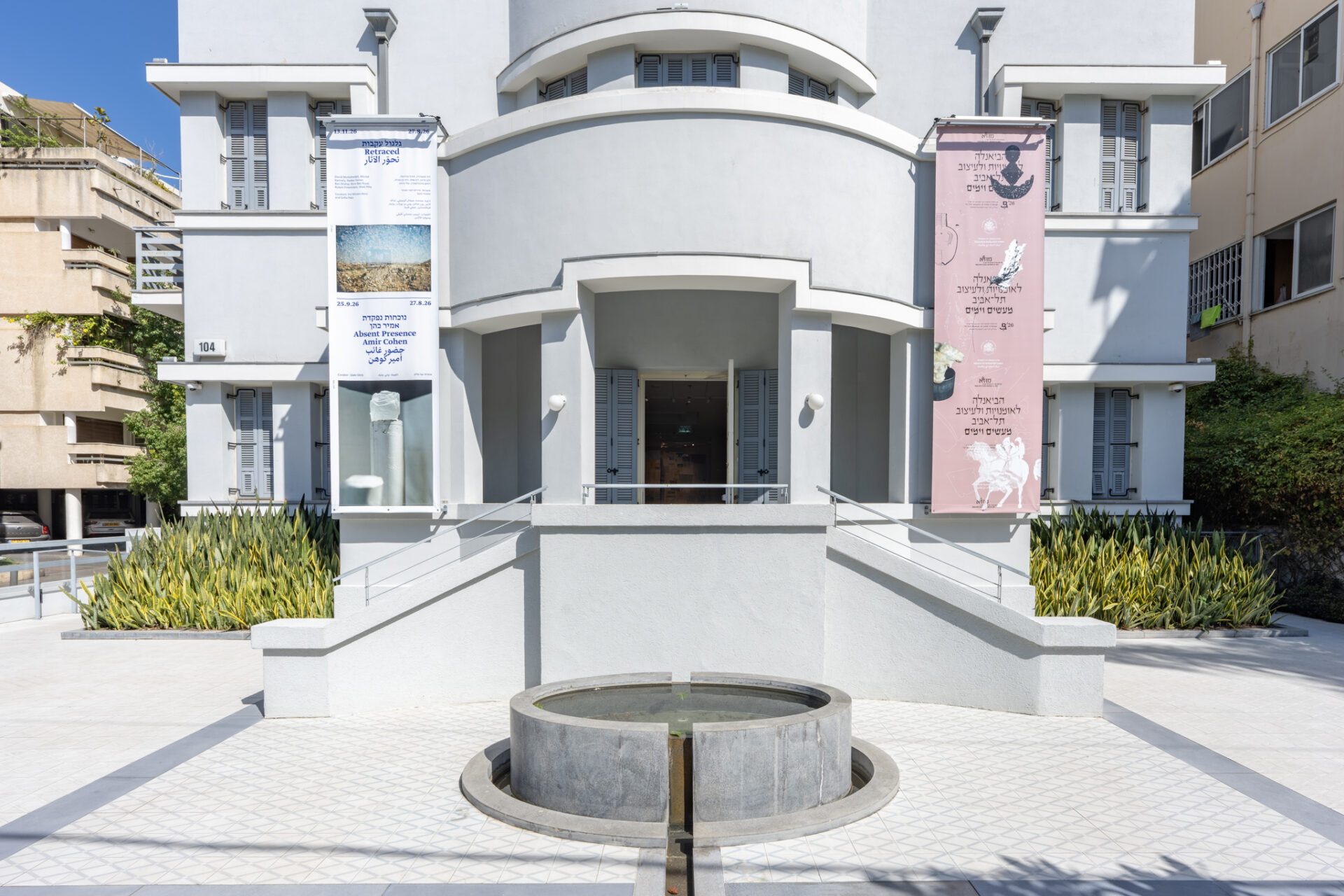
The Tel Aviv Biennale of Crafts and Design 2026 is, for the first time, leaving the confines of the Eretz Israel Museum and extending into the heart of Tel Aviv-Jaffa. This unique collaboration brings together the Third Biennale — whose title is drawn from Hesiod’s poem Works and Days — and the Edmond de Rothschild Center.
In the spirit of Hesiod’s poem, in which community and cooperation play a central role, we sought to work within an existing fabric of community: seven artists, all members of the Edmond de Rothschild Center’s network, who contributed to the exhibition not only their individual talents but also a sense of belonging that had developed well before the exhibition began.
The Retraced exhibition captures a moment within a shared, cyclical process, a moment when the boundaries between creation and destruction become blurred. Acts of creation and renewal exist alongside dismantling and disruption, together creating a living ground for continual transformation. The work process does not strive toward completion or finality; the works trace the ceaseless movement between constructive and destructive forces. Previous layers, materials, textures, memories, and remnants blend into the present fabric, creating a multilayered narrative in which construction and destruction converge in a single gesture of renewal — one that highlights the potential within the absent and the creative force concealed within destruction.
For several months, the works passed from hand to hand. The creators became interveners, the interveners, creators. Control dissolved, and artistic ownership unraveled. Thus emerged a space where individual creation became collective, while the collective was imbued with a new sense of individuality. The encounter between intention and outcome, and between control and release, invites the viewer to experience the beauty of the tension between the complete and the incomplete, and to see creation as a living, breathing process.
The seven works in the exhibition are seven iterations. Each has its own biography: a starting point, deviations, memories, loss and accumulation. Their state in the exhibition marks a momentary pause within an ongoing, never-ending process.
Zero-One | David Mottahedèh –> Roni Ben Porat –> Michal Karniely –> Sheli Piha –> Ron Shahar –> Rotem Finkelstein –> Nadav Feiner
In the beginning there was emptiness.
The starting point of the iteration is the empty set, one of the cornerstones of set theory — an axiom that gives existence to nothingness, allowing an entire system to emerge from it.
Throughout the iterations, languages alternate, but the relationship between existence and absence remains active. The focus shifts from the edges to what happens in the transition itself: the place that is neither zero nor one, the transformation between two states.
The material process is based on acts of tearing, transfer, and accumulation. Parts of the image are transferred to another surface, while others are left behind, and the act of subtraction produces remnants, layers, marks, and textures. The tearing becomes a kind of reverse bandage — an aid-band that removes part of the wound while leaving a scar behind.
From the empty set, an in-between space emerges, where absence and material coexist. Traces of previous images accumulate, giving rise to new images within them. Emptiness does not disappear within the excess of material, but continues to operate in what is erased, interrupted, and subtracted, and in the space between what was and what is created.
Home | Ron Shahar –> Rotem Finkelstein –> Sheli Piha –> Roni Ben Porat –> David Mottahedèh –> Nadav Feiner –> Michal Karniely
A transitional object.
A teddy bear sewn from the fabric of a suitcase becomes a double transitional object. It simultaneously embodies the prospect of departure and the need for attachment. When home is not necessarily a stable point in space, this object becomes a mobile anchor.
Throughout the journey, acts of diligence, play, and surrender to the material are repeated. The home becomes a compilation of gestures, objects, and habits. In the final iteration, it takes shape from materials collected from the previous generation’s home — bureaucratic documents, saved pages, marks, old boards, kitchen towels, and remnants of everyday life.
In this way, the house is constructed over the course of the iteration. At the beginning of the process, it enters the suitcase; by the end, it is sewn from memories and consolations gathered from another home. The transitional object expands into a transitional space.
Living Again | Rotem Finkelstein –> Nadav Feiner –> Ron Shahar –> Michal Karniely –> Roni Ben Porat –> David Mottahedèh –> Sheli Piha
Rotem Finkelstein, Nadav Feiner, Ron Shahar, Michal Karniely, Roni Ben Porat, David Mottahedèh, Sheli Piha
The domestic space.
An iteration of material, memory, and language. It begins with a domestic object that covers and envelopes, undergoes a series of transformations, and culminates in writing recreated through the movement of the hand. Each phase retains the possibility of taking something familiar, dismantling it, and allowing it to acquire a different meaning.
With each iteration, the transition from softness to rigidity becomes increasingly central. Soft material takes on form associated with weight, memory, and commemoration. This tension yields an encounter between qualities that seem distant from one another — a blanket and a tombstone, home and loss, softness and permanence.
In the final transition, the object moves from material into writing. The idea of softening extends into the font, which is associated with obituary notices.¹ Its ordered, rigid lines give way to a more manual, calligraphic, and fluid movement. Through the act of writing, the meaning of the letters also shifts — from death toward the possibility of life, from the fixed to the emerging.
¹ Original font used in the work: “Haim” by Fontimonim
I Didn’t Mean to Worry You | Sheli Piha –> David Mottahedèh –> Rotem Finkelstein –> Nadav Feiner –> Michal Karniely –> Roni Ben Porat –> Ron Shahar
Between an inward gaze and a command to leave.
The iteration begins with the command “go forth” written upon a mirror: an encounter between reflection and movement, between gazing inward and stepping outside. The surface changes along the way, bearing marks, engravings, and layers. The reflection gradually blurs, and the image ceases to meet the viewer’s gaze.
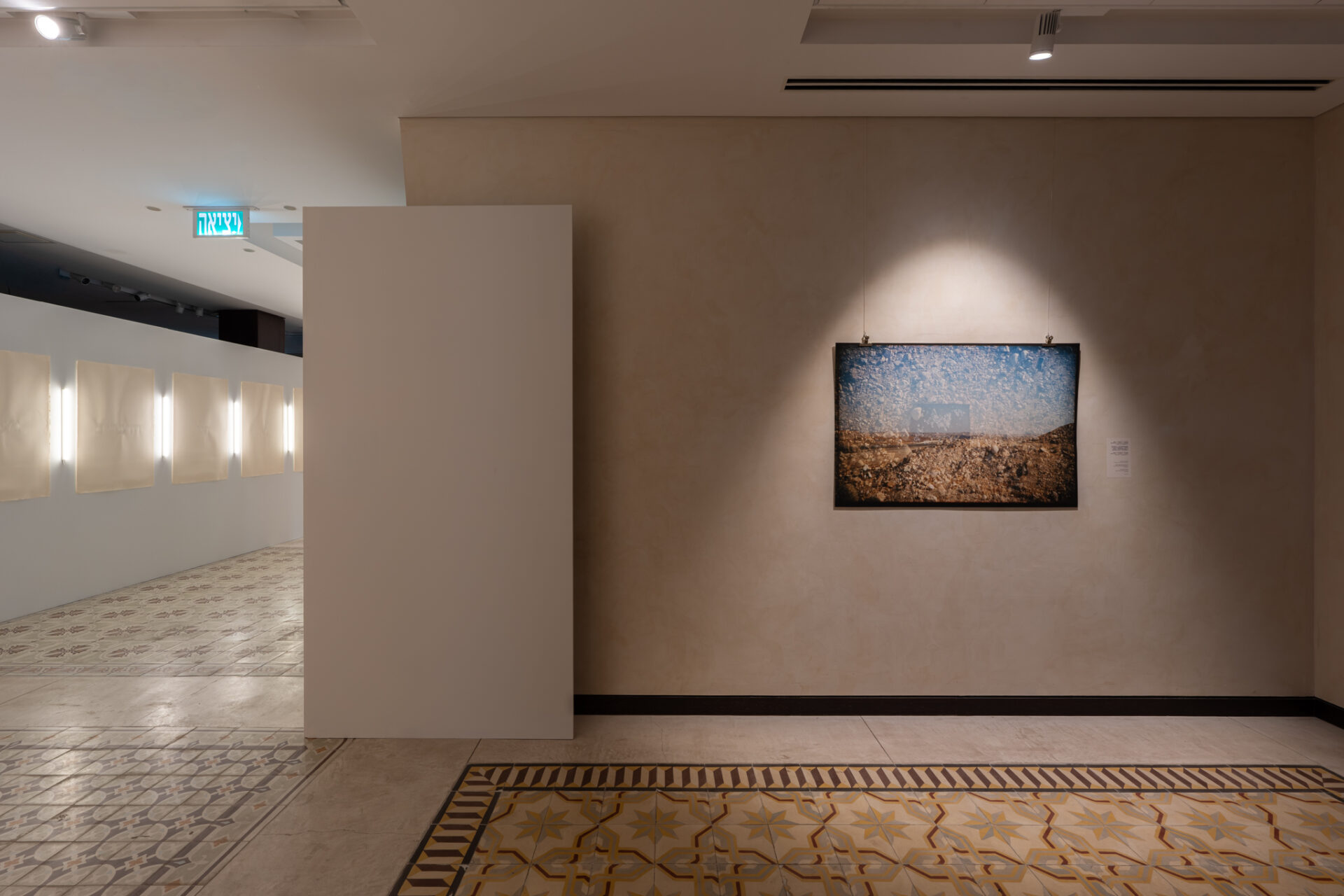
The departure from the mirror becomes a departure from the desert. In the final iteration, the object becomes a transitional space, marked by uncertainty as it moves away from the familiar. Double exposures accumulate traces of previous iterations, until an image emerges that resists full deciphering. This ambiguity is not a flaw but rather part of the work, inviting the gaze to linger.
The reflection casts doubt: one moment, the image seems familiar and nostalgic; the next, estranged. The gaze moves back and forth between recognition and anonymity. The “go forth” of the point of departure eventually arrives at a gaze that no longer knows exactly where it is situated. Perhaps this is another form of self-reflection: stepping outside the familiar far enough for it to momentarily lose its form, only to be recaptured from within the unfamiliar.
Forecasting the Mediterranean | Roni Ben Porat –> Sheli Piha –> Nadav Feiner –> Ron Shahar –> Rotem Finkelstein –> Michal Karniely –> David Mottahedèh
Self-portrait.
With each iteration, the notion of self expands. The portrait absorbs the hands that have worked on it, the materials that have changed, and the traces that accumulated along the way. In the final transition, the scale also shifts — from the singular to the collective, from the individual to the system.
The sea becomes a space for exploring this shift. It is measured through the body, the camera, and the language of code, in an attempt to translate unexpected movement into data, models, and forecasts. Alongside the physical sea, another sea materializes — one that has not yet occurred. The work focuses on the gap between the two, where the forecast fails. The error eventually takes material form, which is a testament to the boundary between the desire to know and that which cannot be forecast.
Drawings, calculations, and measuring instruments accumulate on boards from construction sites and scaffolding. This temporary infrastructure gives the research a physical presence in space. From within the self-portrait, a social portrait of uncertainty emerges — an attempt to impose order on a changing system, through measurements, data, material, and personal writing.
And Perhaps These Things Never Happened at All | Michal Karniely –> Ron Shahar –> David Mottahedèh –> Rotem Finkelstein –> Nadav Feiner –> Sheli Piha –> Roni Ben Porat
A continuum of memories and marks.
Already at the starting point, tension emerges between what can be grasped and what slips away — between the page and the memory it carries, between a form that remains and content that changes with each new turning of the page.
As the iterations progress, the object moves further away from its original form. Images detach from it, becoming silhouettes, remnants of material.
In its final state, the iteration splits into five works. They bear traces of writing and watermarks, hovering on the verge of disappearance: “And perhaps these things never happened at all.” These works emerge as marks that resist complete stabilization — present and erased simultaneously, like a memory upon which water has left its trace.
Transitions | Nadav Feiner –> Michal Karniely –> Roni Ben Porat –> David Mottahedèh –> Sheli Piha –> Ron Shahar –> Rotem Finkelstein
Disruption of reality.
As the iterations progress, the material states change drastically. A flat image acquires volume, an iceberg transforms into fire, fire disperses into pixels, and the two-dimensional and three-dimensional are in constant interplay. Each transition again destabilizes the relationship among source, representation, and duplicate.
In the final iteration, movement shifts between image and material, between physical movement and movement on a screen. The photograph passes repeatedly between media: shot on film, printed, re-filmed on video, and projected onto a screen. With each transition, it moves slightly further from the source, carrying an additional layer of time with it. The movement between analog and digital gives the image body, time, and weight, leaving it in constant motion between one place and another, between holding and release, between reality and its memory.
Within the video, scrolling is performed manually, repetitively, and deliberately slowly. The ease of digital scrolling encounters an almost Sisyphean physical action, connected to movement between places and an attempt to begin anew each time.
In each of these seven iterations, one trace is preserved while another fades away. As the process progressed, the return to earlier stages became increasingly significant. The iterations began to read their own history. The point of departure, the texts that were written, the images that were erased, and the ideas that were abandoned became a repository to which one could return. The temporality of the work became less linear; each transition could reopen an earlier one.
This structure makes it difficult to distinguish construction from destruction. The dismantling of an object preserves the idea once contained within it. Drastic change could be even more violent than physical fracturing; erasure could become a form of memory.
Retraced presents seven transitions within this movement. Each iteration in the exhibition holds both its present form and a history that is never entirely revealed. It is both a contemporary body and a partial archive of what came before it.
The moment the iterations are presented to the public, they momentarily cease to change, while the traces continue to operate within them.