-
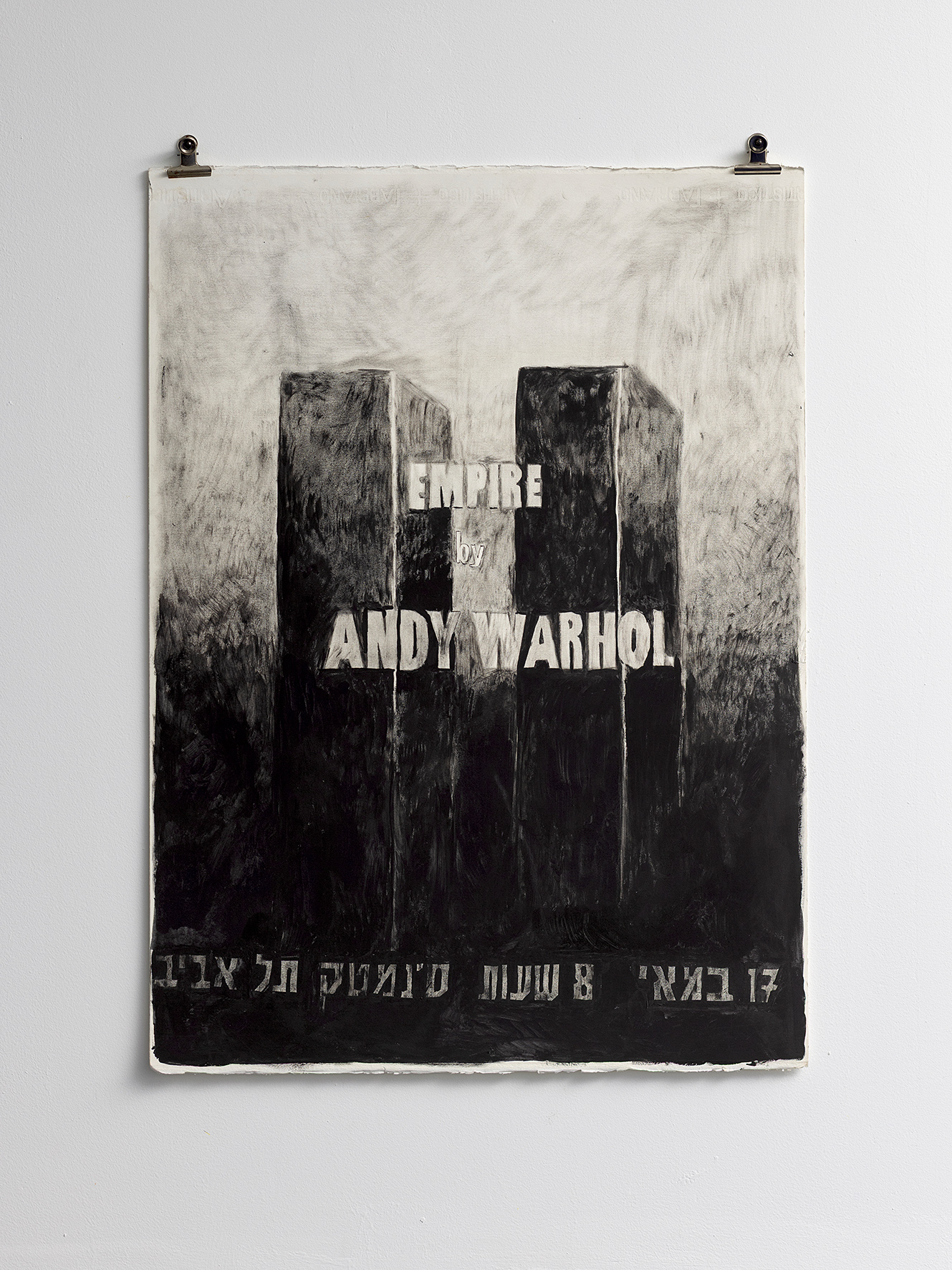
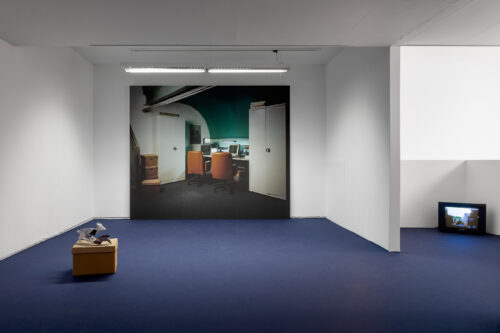 Installation view of the exhibition “Andy, Matthew and Ruti,” CCA Tel Aviv-Yafo, 2026. Photo: Elad Sarig
-
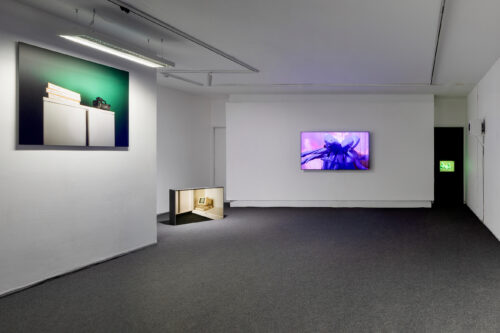 Installation view of the exhibition “Andy, Matthew and Ruti,” CCA Tel Aviv-Yafo, 2026. Photo: Elad Sarig
-
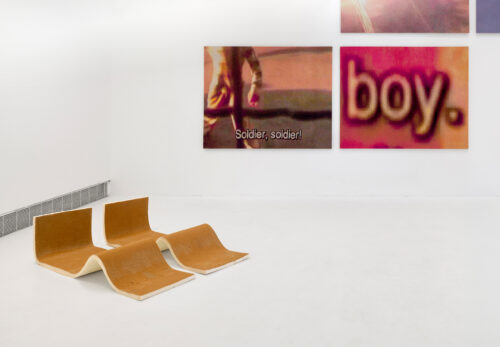 Installation view of the exhibition “Andy, Matthew and Ruti,” CCA Tel Aviv-Yafo, 2026. Photo: Elad Sarig
-
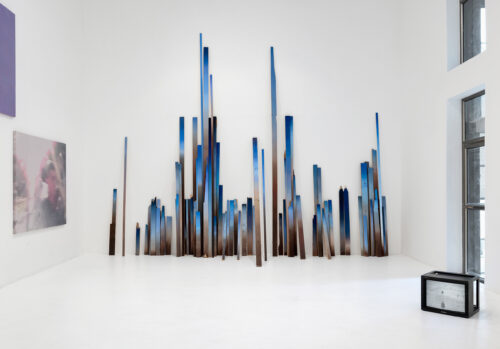 Installation view of the exhibition “Andy, Matthew and Ruti,” CCA Tel Aviv-Yafo, 2026. Photo: Elad Sarig
-
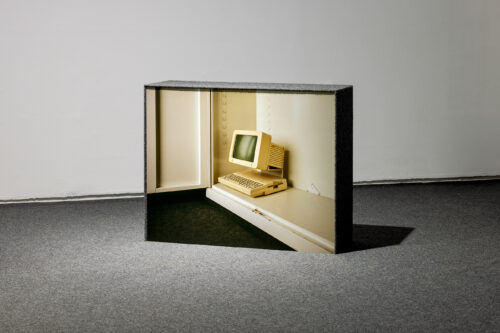 Installation view of the exhibition “Andy, Matthew and Ruti,” CCA Tel Aviv-Yafo, 2026. Photo: Elad Sarig
-
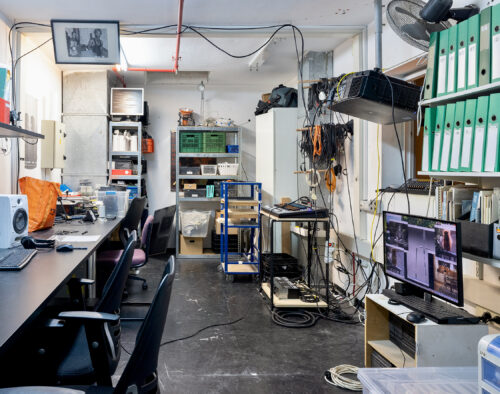 Installation view of the exhibition “Andy, Matthew and Ruti,” CCA Tel Aviv-Yafo, 2026. Photo: Elad Sarig
-
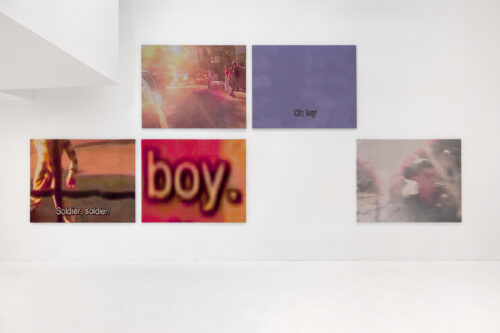 Installation view of the exhibition “Andy, Matthew and Ruti,” CCA Tel Aviv-Yafo, 2026. Photo: Elad Sarig
-
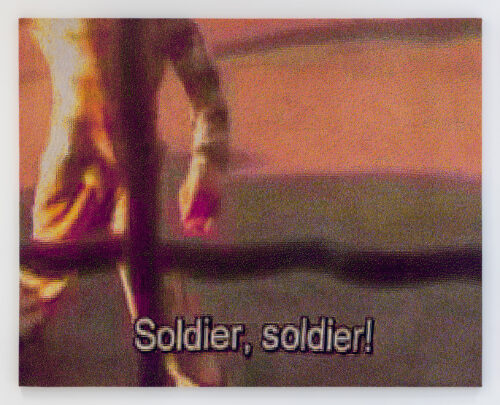 Installation view of the exhibition “Andy, Matthew and Ruti,” CCA Tel Aviv-Yafo, 2026. Photo: Elad Sarig
-
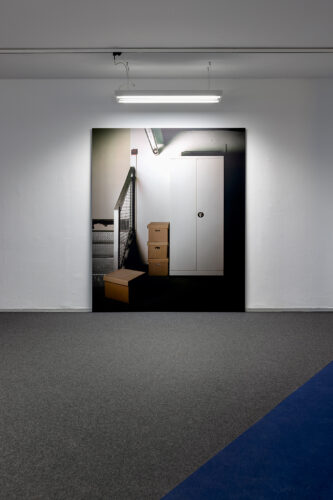 Installation view of the exhibition “Andy, Matthew and Ruti,” CCA Tel Aviv-Yafo, 2026. Photo: Elad Sarig
-
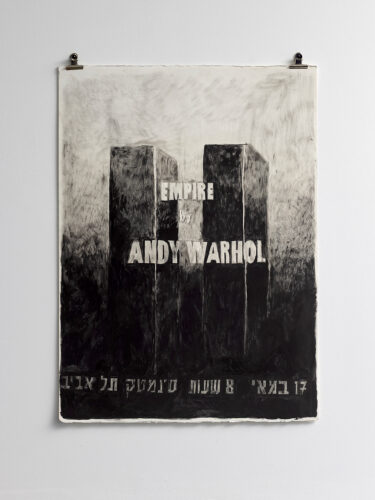 Installation view of the exhibition “Andy, Matthew and Ruti,” CCA Tel Aviv-Yafo, 2026. Photo: Elad Sarig
Andy, Matthew, and Ruti
A Tribute Exhibition to the CCA Video Archive
The story of the Center for Contemporary Art cannot be separated from the history of its video archive. The archive began to take shape in the late 1990s, when the Center was still operating out of a small room at the Tel Aviv Cinematheque. At the time, video editing equipment was expensive and largely inaccessible, and the archive served artists not only as a place to view and preserve works, but also as a space for editing and producing them.
Over the years, thousands of works entered the archive from a wide range of sources: the video art fund initiated by the Center; the “Local Time” screening series; the VideoZone Biennial, also initiated by the Center; and the CCA’s broader ongoing activities initiated and directed by Sergio Edelsztein. The archive did not take shape around one single, coherent narrative, but rather through a succession of choices, encounters, initiatives, and circumstances. It holds within it both the history of the medium and the history of the Center itself.
For this exhibition, a group of young artists working across a range of media were invited to spend time with the archive, to view its works, and to encounter the people and stories connected to its formation. They were not asked to represent or summarize the archive, but rather to offer a contemporary reading of it: to linger on an image, a material, or a memory; to attend to what has been preserved and to what is absent from it; and to consider how a historical body of works continues to live, shift, and acquire new meanings in the present. The texts that follow were written by the artists and describe, each in their own way, their encounter with the archive and the work processes that emerged from it.
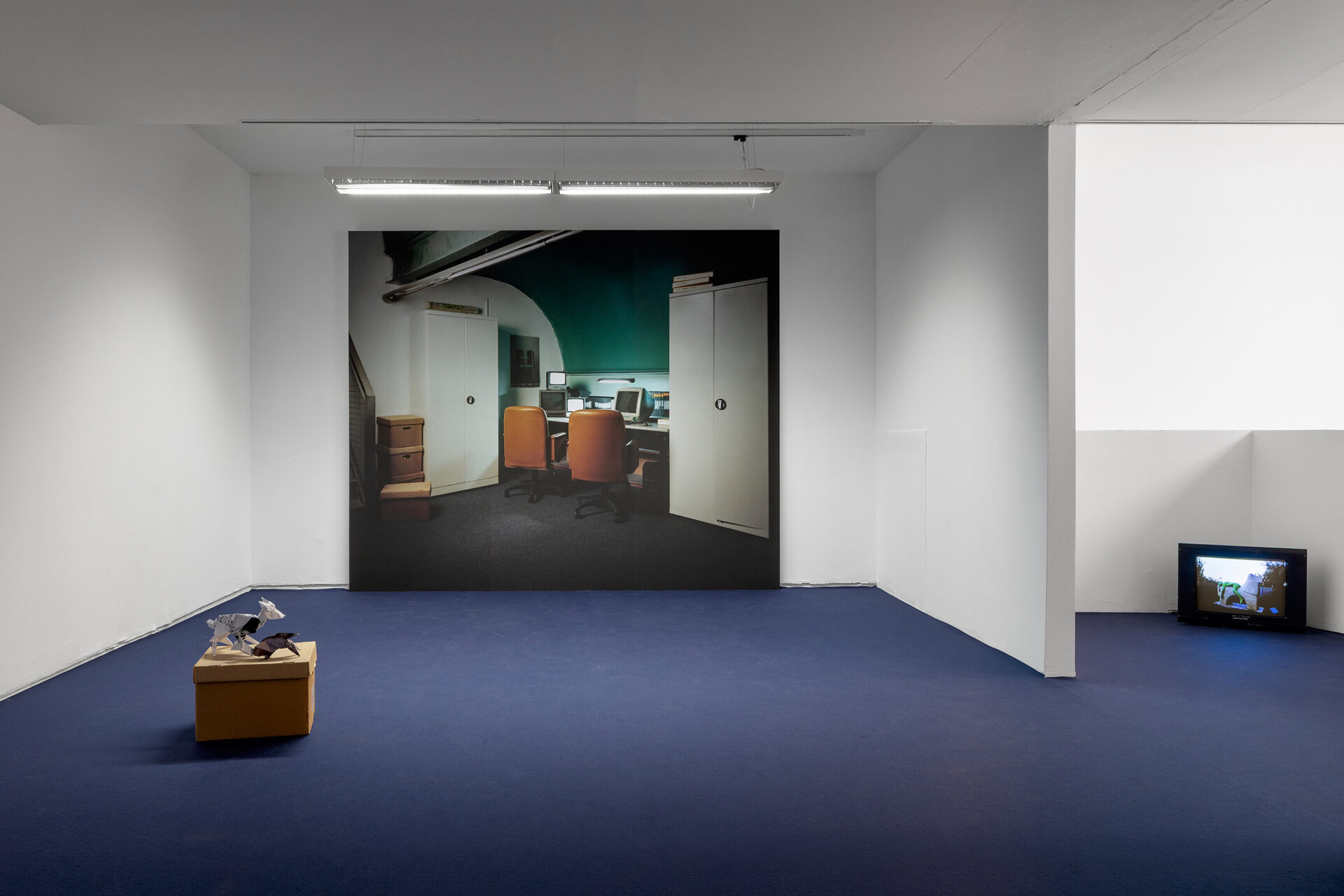
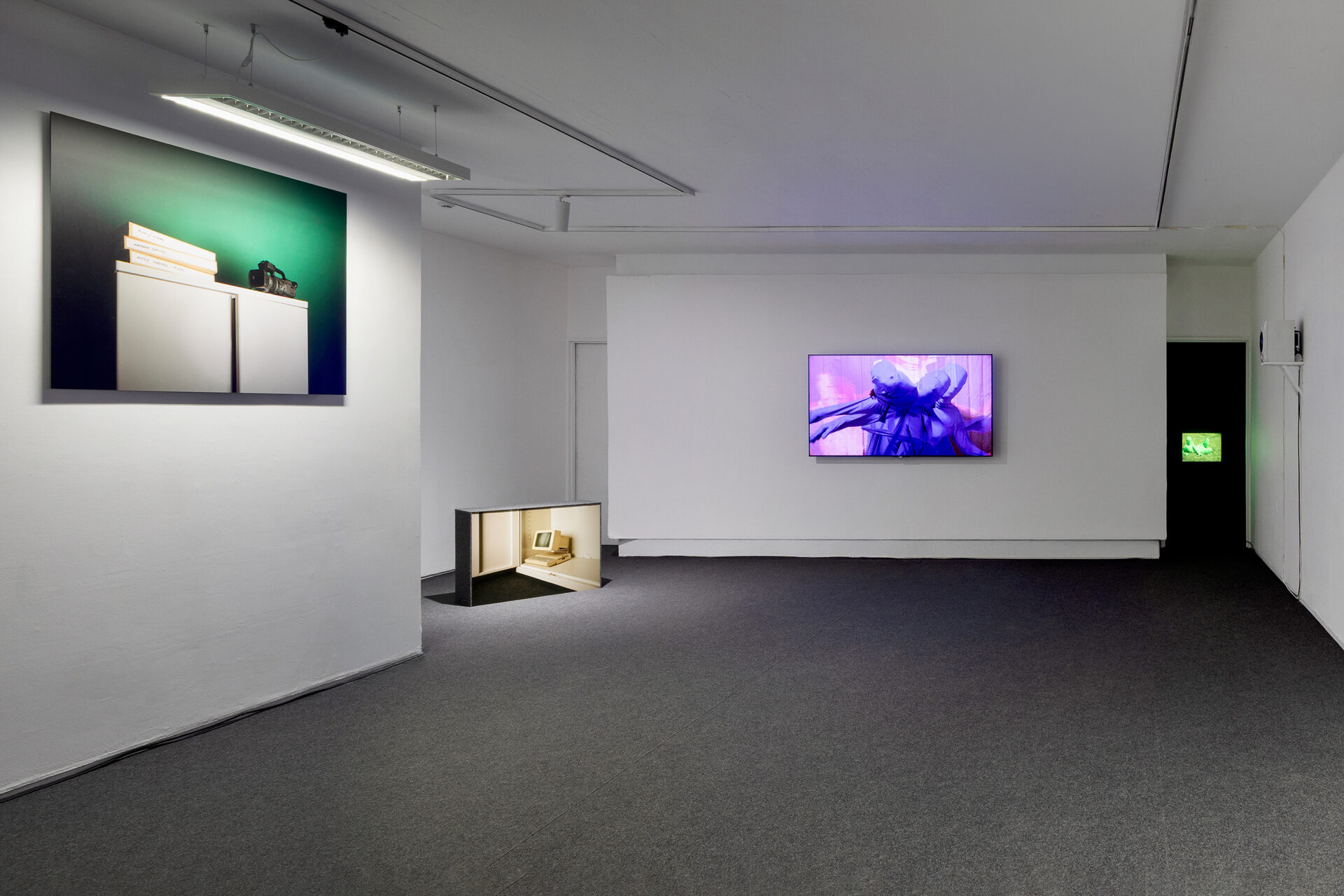
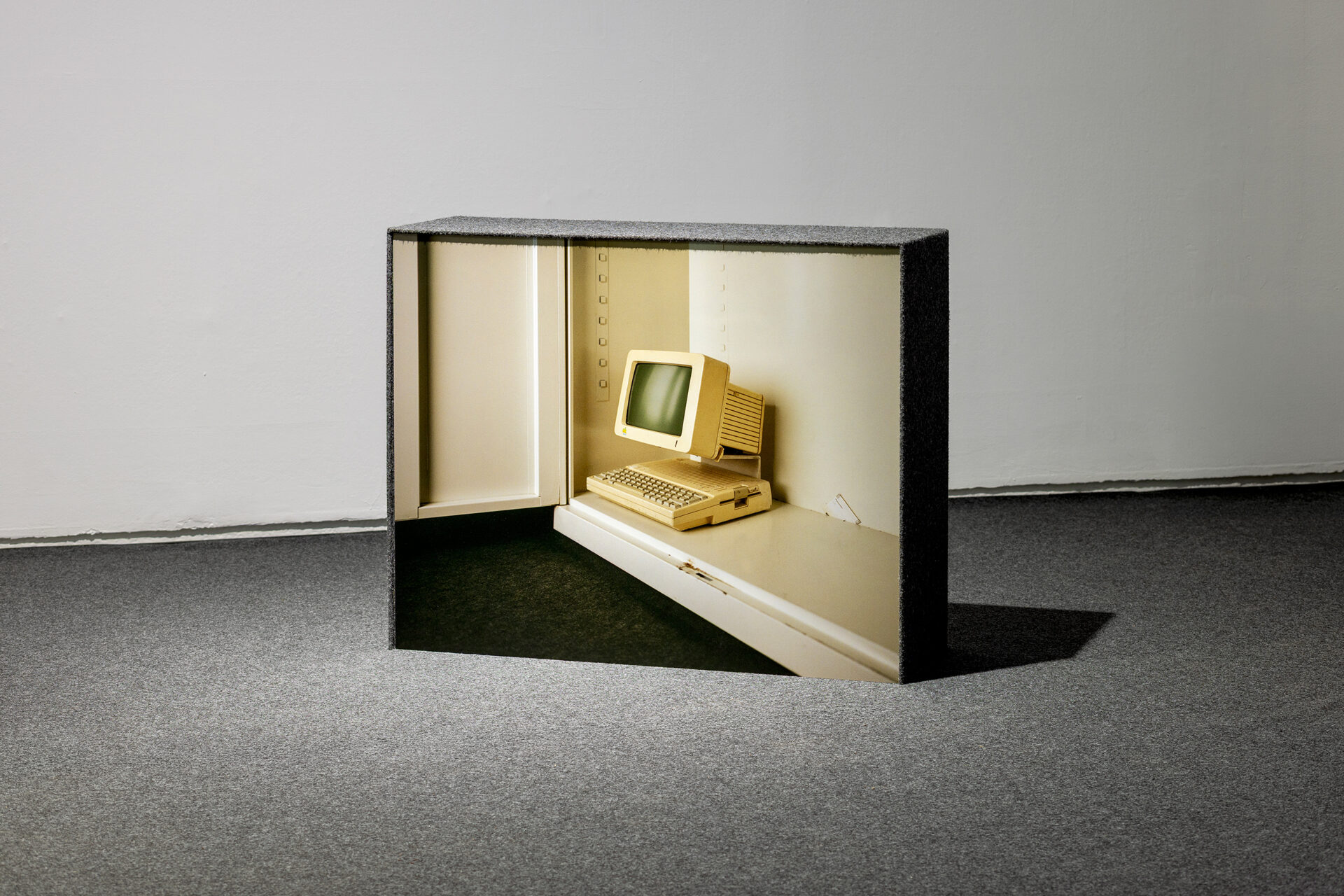
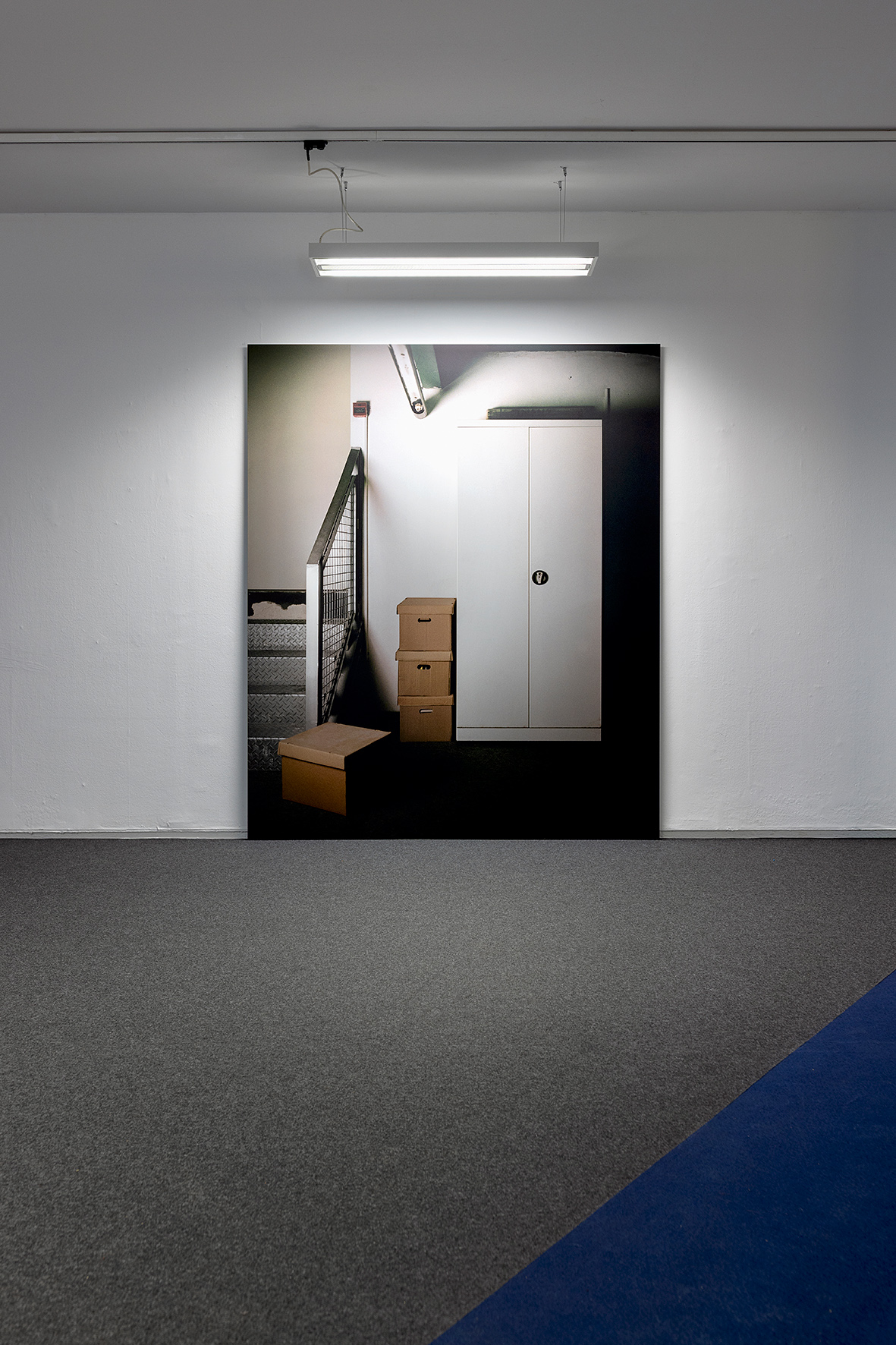
Dafna Amira — The CCA Video Archive, photography installation
While watching video works in the CCA’s upper office floor, where the archive is housed, I found myself more interested in the character of the space in which I was sitting, in the act of watching, and in the setting itself, than in any particular work. There were works I liked, but I was trying to understand how to approach them as a whole. At one of our group meetings, we met Sergio Edelsztein, who recounted the history of the archive, his love of video art, and his desire to establish the medium within the local art field. I was surprised to learn that the CCA had begun in a small, temporary room in the Tel Aviv Cinematheque. A group of video artists had come together to establish a video archive, without knowing where this initiative would eventually lead.
Video-editing equipment was expensive and inaccessible at the time. The archive was not intended merely to collect and preserve works, but also to enable their production and serve as an editing room. Ruti Sela, who was responsible for the archive, was trained to work with the new editing software and assisted artists in editing their works on site.
The story of how the CCA came into being sparked what I had been looking for — the whole being greater than the sum of its parts. I began imagining that room and looking for documentation of it, even incidental documentation, but found none. What remained of the place was scattered across the memories of those who had worked there and visited it.
I called Sergio and asked him to describe it: What did the room look like? What was in it? One chair or two? What kind of floor? What walls? A computer? A shelf? Tapes? Some questions had definite answers; others elicited vague ones. Sergio referred me to other people who had spent time in the archive, and from one person I continued to the next. The questions remained the same, but the answers did not necessarily. Some remembered one kind of floor, while others remembered another.
At first, I tried to conduct the interviews with relative neutrality, drawing as much as possible from each person’s private memory without revealing details I had heard from others. Later, I began to confront the testimonies with one another. A general image began to emerge from the descriptions: cream-colored textured walls; beige tiled flooring, or perhaps a carpet; two gray Formica tables; two office chairs; two beige metal cabinets; two computers and a shelf of tapes. A small room, estimated at roughly two by two and a half meters — temporary, cramped, and functional.
The photographs I created are not a historical reconstruction in the conventional sense. Although history is present within it, the work is centered on what was not documented, and on the possibility of inhabiting an imagined space that has been lost. Each of the interviewees looked at the place differently, remembered what had been meaningful to them, and forgot other details. The accumulated testimonies produced an image of a place that was fragile, whole, and fragmented at the same time. Where memories did not overlap, I allowed my imagined archive to decide for me.
I built the photographic set next to the current video archive. The archive of the past merged with its present and became embedded in the architectural characteristics of the CCA building, creating a hybrid space.
Adir Cohen – Between Four and Six, painted sculpture
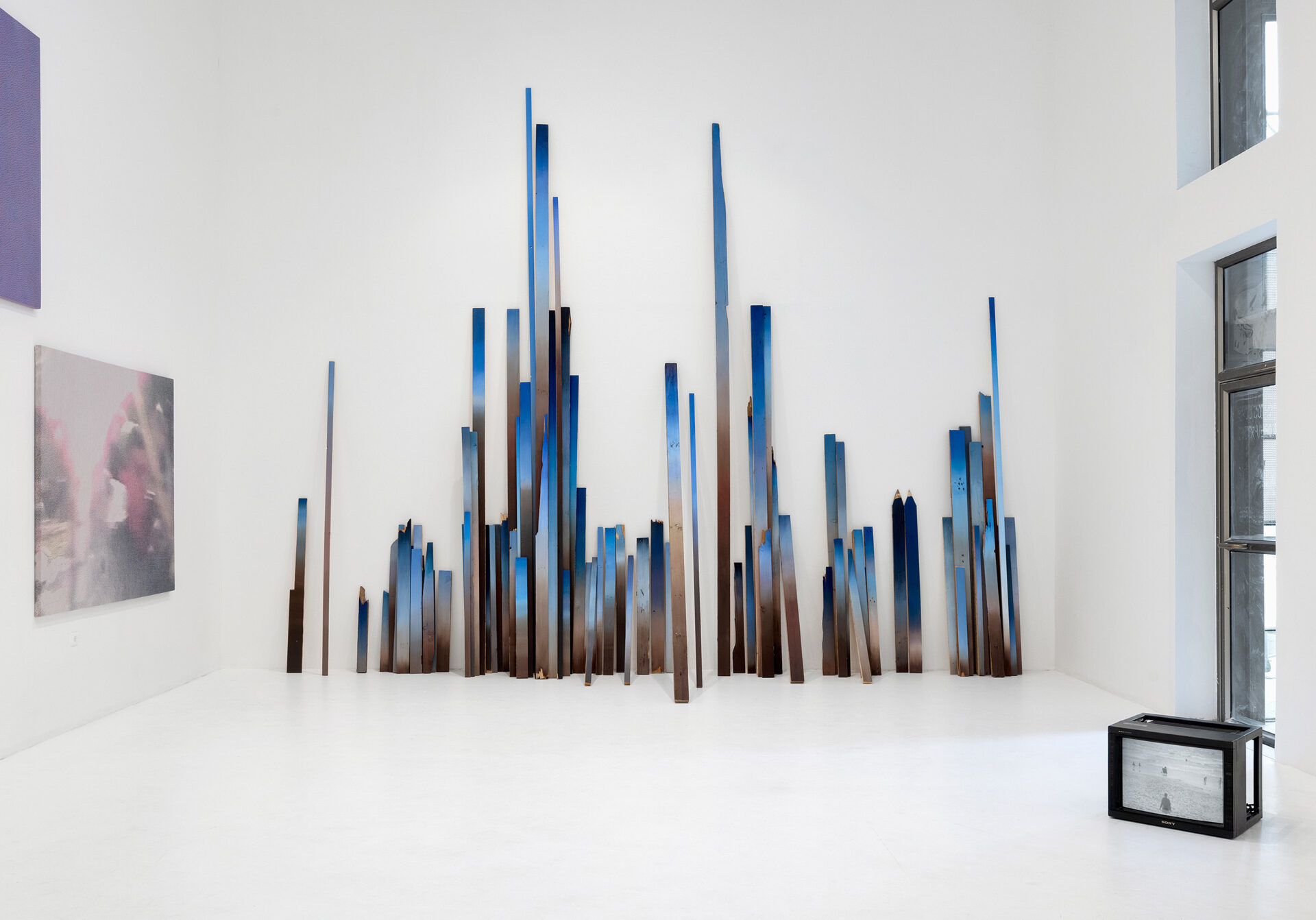
For several months now, I have been collecting slender wood planks. I walk the streets, change familiar routes and discover alleys; I rummage through dumpsters, enter construction sites, carpentry workshops, and old houses, and collect the planks on my way to the studio. They are pieces of wood of different sizes, mostly old, wounded, nailed, cut, and abandoned — pieces that never found their purpose. Some carry traces of paint, concrete, sand, plaster, and dust, as well as an old, strong smell.
I set a system: each time, the action is performed on a single plank, with a single brush, a single coat of paint. The oil paint is diluted in linseed oil, moving from blue to brown. The blue may be light or dark, heavy or faint, fluorescent or aged; the brown unfolds across a range of warm, cool, and lukewarm tones.
The dimensions of each plank define a vertical landscape painting. On each one, I paint sky, sea, sand, earth, and ground, evoking a horizon, a viewpoint, depth of field, and optical illusion. The elements — air, earth, water, and fire — are given equal weight. These are samples of landscape, fragments of an image, and pieces of background.
Once the painting is complete, the plank is leaned against the wall like a tired person. As they accumulate, they form a distorted landscape painting. The eye fills in what is missing and sees the larger image even in the absence of a complete picture. It moves from beam to beam, like a hand playing a piano, hitting the notes from strong to weak.
The action emerged from watching works in the CCA’s video archive, particularly those that evoke images of temperature, weather, shifting materiality, and the seasons, as well as acts of painting and actions in space. A central point of departure was Smadar Dreyfus’s Lifeguards (2005). In retrospect, it occurred to me that just as the lifeguard watches the bathers, so I watch the video works. He assembles his image of the landscape, and I assemble mine — as if from an instruction manual.
In Dreyfus’s work, the soundtrack is separated from the visual landscape. On one channel, the lifeguard’s calls can be read and heard; on the other, the landscape of the bathers in the water appears in silence. The lifeguard’s instructions echoed in the studio as I painted the planks, like directions for staging the working process. They evoked the memory of the Israeli landscape and the Tel Aviv beach — the heat, the haze, the blue, murky sea; the crowds of bathers in July and August; groups of children and families alongside colorful inflatables.
This is the crowding that characterizes the Israeli summer: a space in which the shared aspiration is toward freedom and pleasure, but which is also governed by regulation, power, danger, law, and order. As the lifeguard calls out warnings about suspicious objects, I think of abandoned beach beds belonging to a pair of lovers. Of the individual trying to become two. Of loneliness and couplehood.
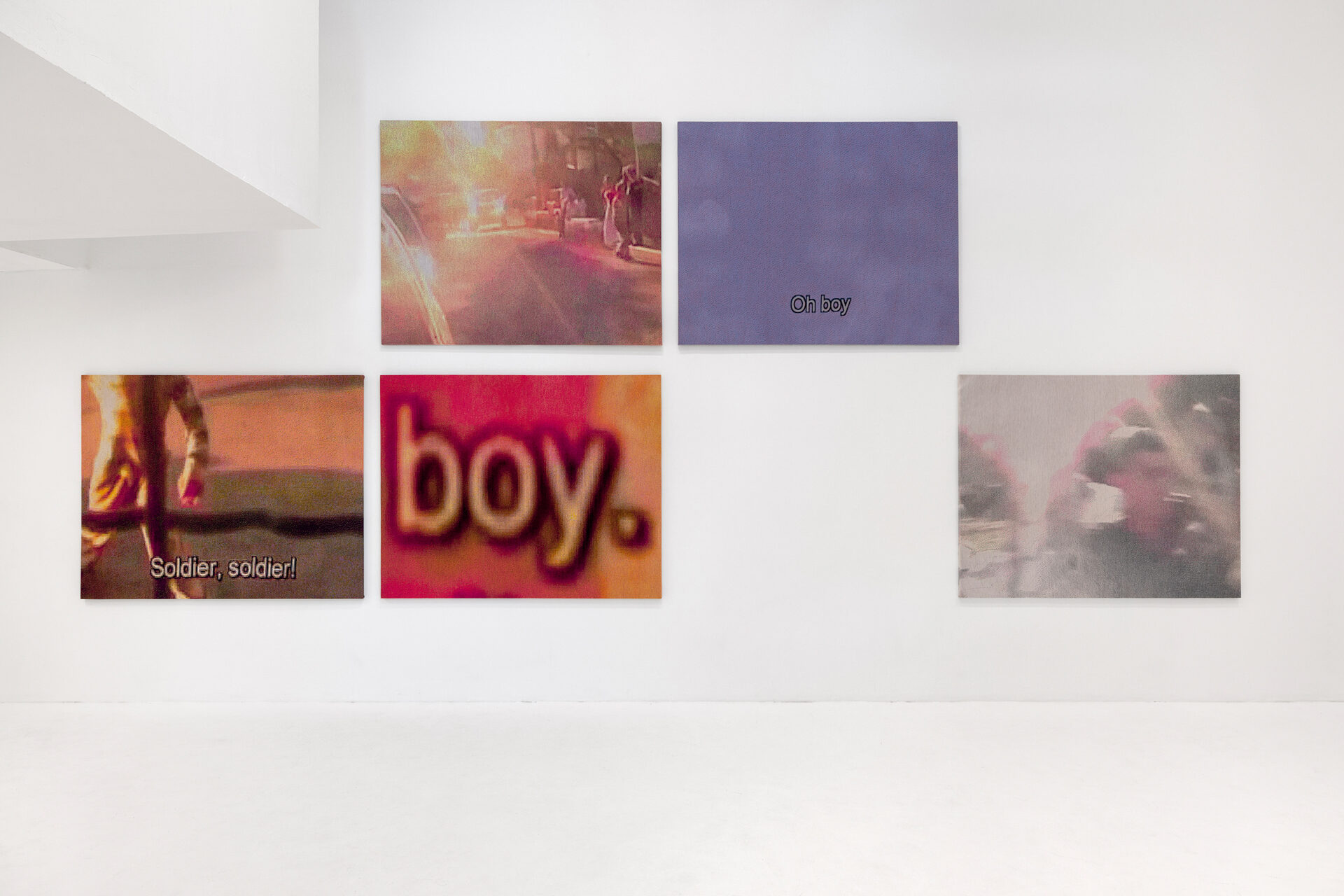
Liam Chambon | Boys Will Be Boys, digital knitting
The arrival of materials from the organization B’Tselem in the CCA’s video archive is an unusual case. Footage filmed in the Occupied Territories and dealing with power relations and institutionalized violence is catalogued alongside canonical video works. But here, this is not a paraphrase of reality; it is the thing itself. For me, watching reality mediated through a body camera was more unsettling than anything else I encountered in the archive.
The dissonance between the impulse to engage with these images and my recoil from them determined the way I worked. The artistic gesture almost undermines itself by being driven in two opposing directions.
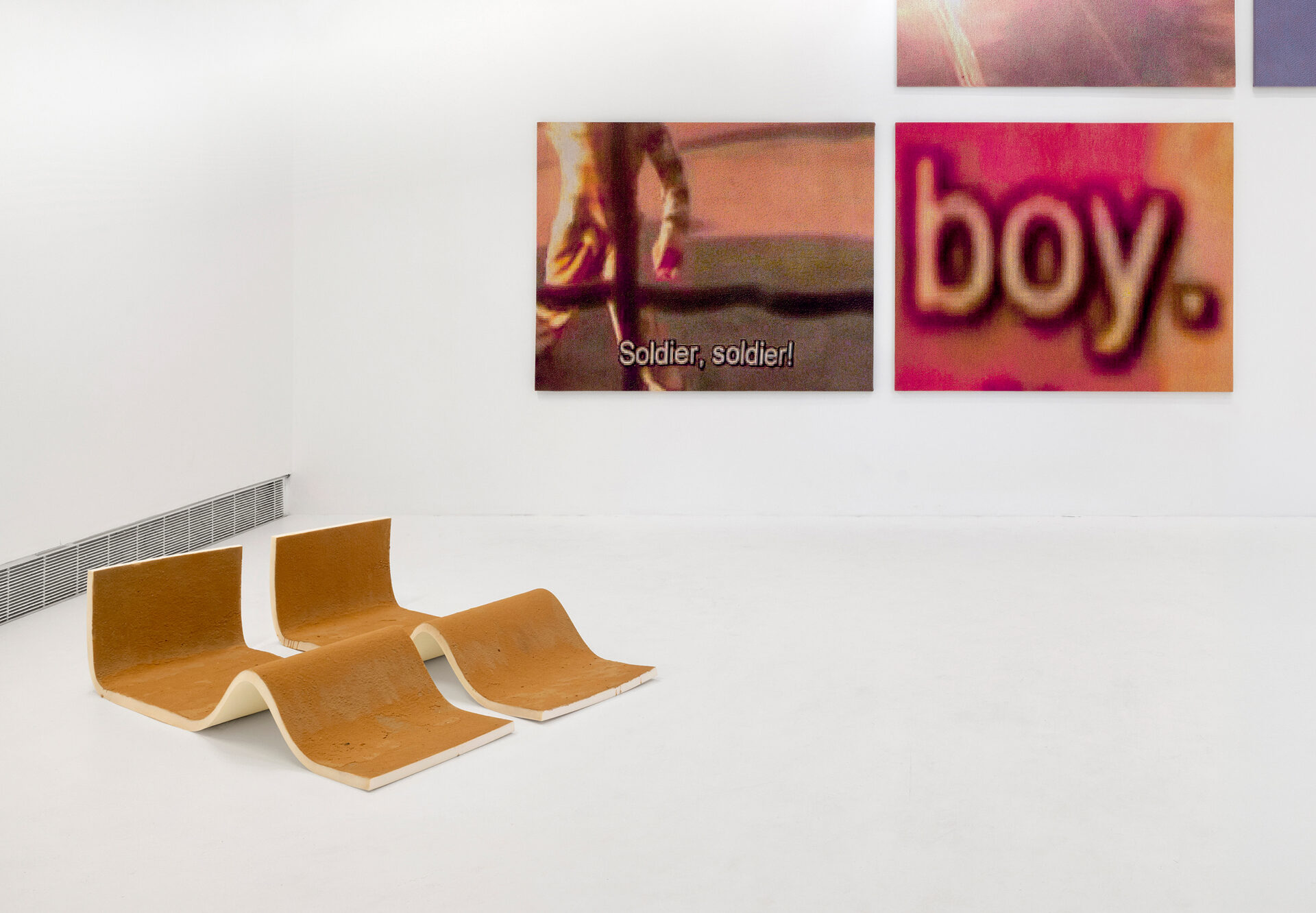
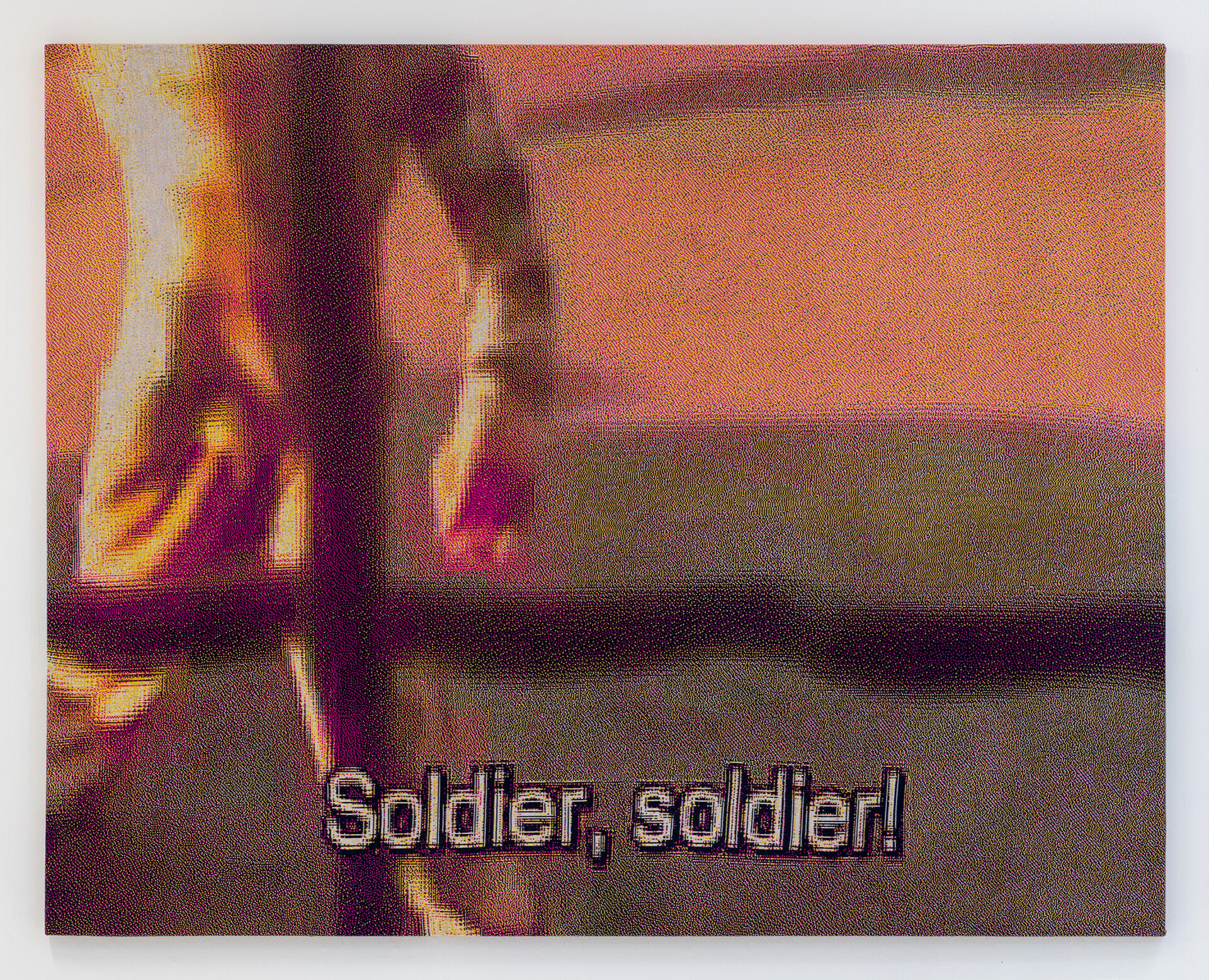
From the video footage, I selected individual frames — blurred, pixelated, and at times pointed toward the sun — carrying a nostalgic atmosphere of the 1990s. Their selection works against the essence of the videos from which they were taken, obscuring the shudder they evoke. The work deals with optics, vision, and its limits: how much I am willing or able to see, and how I process what I see.
The pixelated images are enlarged close-ups that were then translated into computerized knitting, in which each digital pixel is rendered as a physical thread. The limited resolution of the technique becomes another barrier between the image and us. The fabric itself, absorbing light, further diminishes the image’s ability to dazzle.
The work begins with a first encounter with a wound. An image that conveys nostalgia, the nineties, a sense of youth, MTV, emerges from something bleeding. It also references the history of Israeli art: Moshe Gershuni’s Soldier! Soldier! (1981), a work that pits a militaristic atmosphere against an uninhibited sexual impulse. On another level, beneath the surface, is the artist Yehudit Levin, whose work often draws on memories of events at checkpoints in the early 2000s, when she joined the organization MachsomWatch — works that dazzle to the point of making the image impossible to see as innocent.
Tamar Perry | Hereness, sound installation
The CCA’s video archive has no single narrative. The works it contains arrived there through a chain of events, choices, and circumstances: sometimes as deliberate collections and sometimes almost by chance. Over the years, they were catalogued together, even when information about their origins and the contexts in which they were collected remained incomplete. Through conversations about the archive, its development, and the gaps within it, its character itself began to become abstract.
The work turns to a selection from the archive chosen collectively by the group of artists participating in the exhibition. We watched the works together, and I now approach them as a derivative that represents the whole — a kind of shared subconscious of the group, carrying something of the spirit of the archive as a whole.
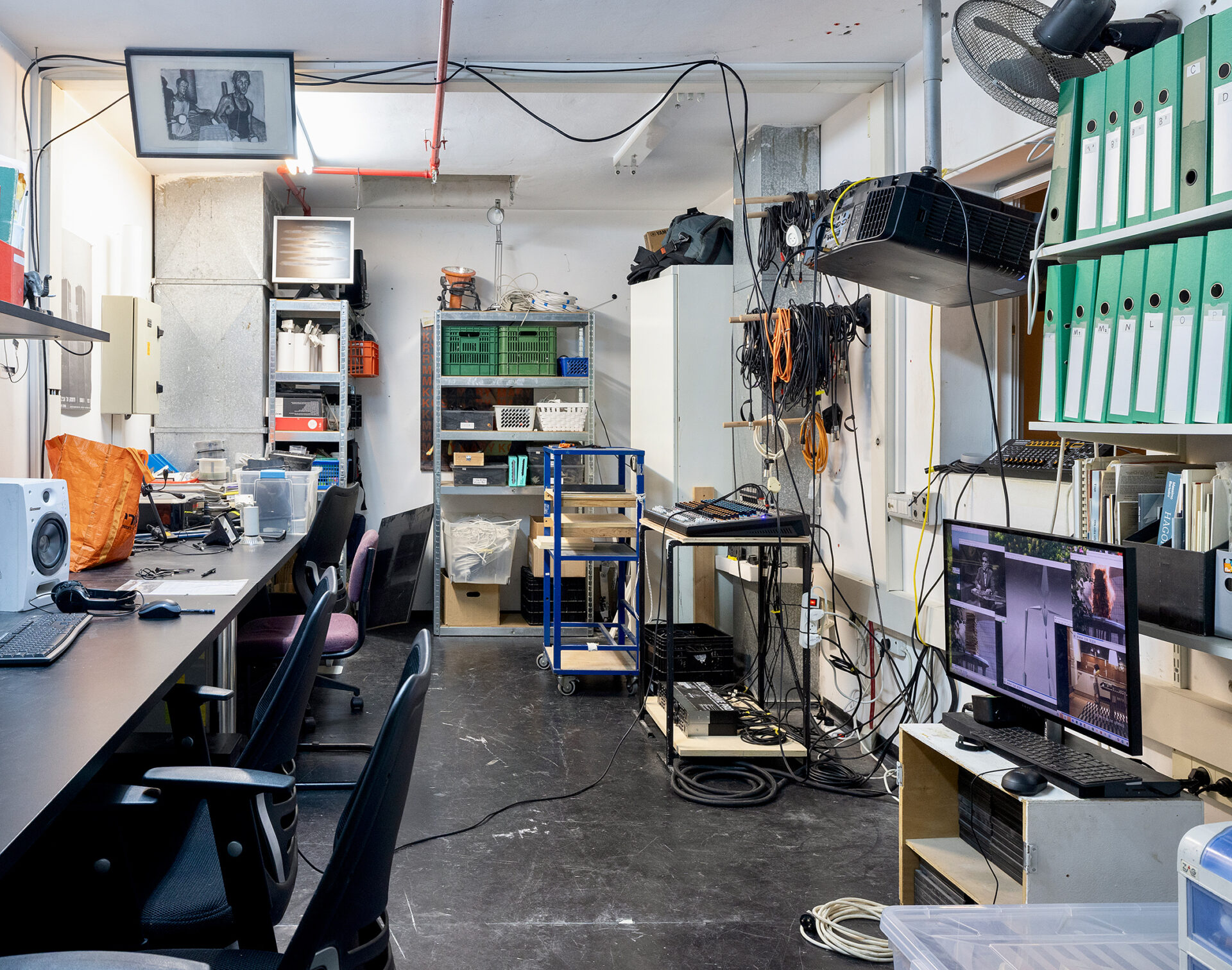
I want to detach myself from the images and remain with the sound they produce. The works are played in the CCA’s control room, which is closed to the public. During their screening, I listen to the room’s walls and record them using contact microphones — pickups that capture vibrations traveling through material. The computer plays the works into the room, and the walls listen to them. The sound they absorb and return is transmitted into the exhibition spaces.
I approach the archive as a body and seek to locate its heartbeat, as a stethoscope listens to a living body. The sequence of works and accumulation of sounds create a new layer: a kind of aquifer of the archive, processed through the building that contains it. Although the archive cannot be clearly seen, it continues to exist as part of the architecture of the place.
The sound is heard in two spaces and on two different levels. On the entrance level, it appears as an underground murmur; on the upper level, it accumulates into an excess of information that begins to lose its shape. The archive is not presented as a library of images, but as living matter — a hidden body transmitting its presence through the walls.
Laila Abd Elrazaq | Nothing to Declare, video installation
The installation consists of multiple monitors displaying looping videos of my body wearing a green zentai suit. Using chroma key, the body is continuously erased, replaced, fragmented, and transformed through changing backgrounds, images, textures, and digital interventions. The figure remains present across the screens while simultaneously resisting stable identification.
The work is conceived as an homage to Gili Avissar’s Green Room (2015), particularly its sense of play, experimentation, and visual absurdity. Rather than reproducing the original work, I revisit its playful approach through my own longstanding experimentation with green-screen compositing.
The concealed body introduces a tension between visibility and identification. Within an art context where artists — particularly those working from specific cultural or political positions — can be expected to make their identity available as part of the work, the green suit temporarily withholds these markers. The work therefore treats chroma key not only as a visual effect, but also as a way of questioning the demand to be recognizable, legible, and representative.
Curators: Hila Cohen-Schneiderman and Tamar Margalit
Research Assistant: Koral Dvir
In collaboration with the Edmond de Rothschild Foundation